
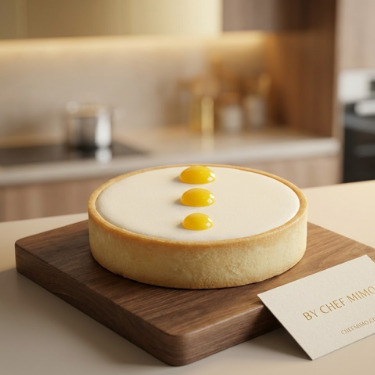
🍋 Tartelette au Citron — French Lemon Tartlets
The Gold Standard: Introduction to the French Lemon Tartlet
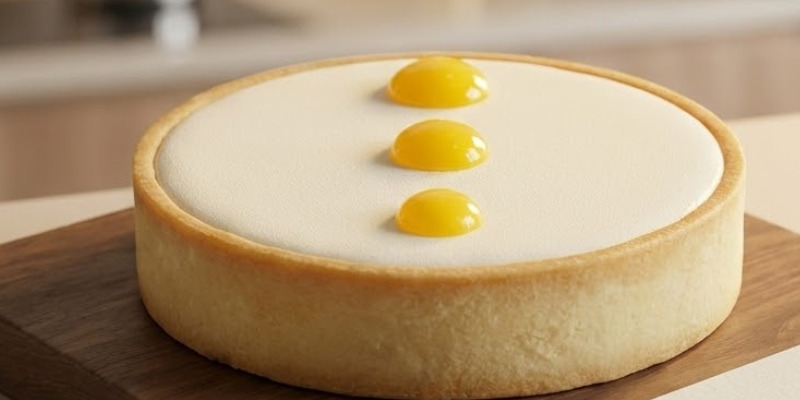
In the world of French pâtisserie, there is no place to hide in a Tartelette au Citron. It relies on just two elements: a crisp, buttery shell and a silky, intense lemon cream. Unlike the American "Lemon Bar" or "Meringue Pie" which rely on cornstarch thickeners, the French version is a study in emulsified fats.This recipe uses the "Lemon Cream" method (popularized by Pierre Hermé), where the butter is not cooked with the juice but blended in at the end. This technique transforms the filling from a simple curd into a luxurious, opaque emulsion that melts on the tongue like a ganache.Why master this? It is the ultimate test of temperature control. It teaches you how to temper eggs to avoid scrambling, how to create a hydrophobic seal to keep the crust crunchy for days, and how to line tart rings with geometric precision.Ingredients
🍋 Lemon Cream
- 100 g lemon juice
- 90 g sugar
- Zest of 1 lemon
- 2 eggs
- 200 g unsalted butter cubed
🥧 Sweet Shortcrust Pastry
- 90 g powdered sugar
- Pinch of salt
- 0.5 tsp vanilla paste
- 120 g unsalted butter
- 1 egg M
- 280 g all-purpose flour type 405
🍫 Coating & Decoration
- 30 g white chocolate
- Candied lemon peel for garnish
Mastering Textures and Flavors📗 Download your PDF now!
Instructions
Lemon Cream (Make Ahead)
- In a saucepan, bring lemon juice, sugar, and lemon zest to a boil.
- In a separate bowl, whisk the eggs. Gradually temper them with the hot lemon mixture.
- Return to the saucepan and cook while stirring until slightly thickened.
- Remove from heat and let cool for 10 minutes.
- Add cubed butter and blend with an immersion blender until smooth.
- Pour into a bowl and chill overnight.
Sweet Shortcrust Pastry
- Cream together butter, powdered sugar, salt, and vanilla paste.
- Mix in the egg.
- Add flour and knead until fully combined.
- Roll between two sheets of parchment and chill for 30 minutes.
- Cut 6 long strips for tartlet edges and 6 circles for the base.
- Line tart rings (8 cm) with dough, pressing gently to connect edges and base. Trim excess.
- Chill again for 30 minutes.
- Tip: No need for pie weights — the chilled dough holds shape during baking.
Baking the Tartlets
- Preheat oven to 160°C (fan).
- Prick tartlet bases with a fork.
- Bake for 15–20 minutes until golden brown. Cool completely.
Coating
- Melt white chocolate (microwave or double boiler).
- Brush a thin layer inside each tartlet shell to seal and prevent sogginess.
Filling & Decoration
- Spoon chilled lemon cream into tart shells and smooth the surface.
- Cut small discs or shapes from candied lemon peel and place them on top for garnish.
🕰 Serving & Storage:
- Store in the fridge and enjoy within 2–3 days. Best served chilled or at room temperature.
Notes
 The Science of Ingredients: Chemistry of Emulsion and Crunch
To achieve a silky texture without starch, we rely on physics.
1. The Butter Emulsion (Not Curd)
The recipe calls for adding 200g of cubed butter after the eggs and juice are cooked.- The Science: In a standard curd, butter is melted hot. This makes it greasy. In this Lemon Cream, we cool the cooked egg/juice mixture to about 45°C–50°C before adding the butter. We then use an immersion blender to shear the butter fat into microscopic droplets. The egg proteins coat these droplets, creating a stable emulsion. The result is a cream that reflects light (opaque and glossy) and has a lighter mouthfeel than cooked butter.
2. White Chocolate Seal (Hydrophobic Barrier)
A thin layer of white chocolate is brushed inside the baked shell.- The Science: Lemon cream contains a lot of water (from the juice and eggs). Pâte Sablée is dry and porous. By nature, the moisture wants to migrate into the crust, making it soggy within hours. Cocoa butter (in white chocolate) is hydrophobic (water-repelling). By brushing a paper-thin layer inside the hot shell, you create a waterproof tank that keeps the crust crisp for up to 3 days.
3. Powdered Sugar in Crust (Texture Control)
The pastry uses 90g of Powdered Sugar, not granulated.- The Science: Granulated sugar creates air pockets when creamed with butter, leading to a cookie that spreads. Powdered sugar (which contains cornstarch) dissolves instantly into the butter, creating a dense, compact dough. This density is crucial for tartlets because it holds sharp vertical edges and prevents the dough from shrinking or puffing up excessively during baking.
4. Tempering Eggs
The hot juice is poured gradually into the whisked eggs.- The Science: Egg yolks coagulate (scramble) at around 65°C-70°C. Boiling lemon juice is 100°C. If you dump the eggs into the pot, they will cook instantly into lumps. By pouring the hot liquid into the eggs while whisking, you raise the temperature of the eggs gradually, allowing the proteins to unravel slowly without clumping.
Essential Professional Kitchen Tools
Simplicity requires perfect execution tools.-
Immersion Blender (Stick Blender)
- Why you need it: Non-negotiable for the Lemon Cream. A whisk cannot shear the butter fat small enough to create the perfect emulsion. Only a high-speed blade can break the fat down to create that signature pale yellow, silky shine.
-
Perforated Tart Rings (8cm)
- Why you need it: Standard fluted tins trap steam. Perforated rings allow moisture to escape from the sides of the dough during baking, resulting in a deeper golden color and a crunchier texture.
-
Pastry Brush
- Why you need it: To apply the white chocolate seal. You need a thin, even coating. A spoon would leave thick pools of white chocolate that would be unpleasant to eat.
-
Microplane Zester
- Why you need it: The flavor of lemon lives in the essential oils of the zest, not just the juice. A microplane shaves the zest finely enough that it melts into the cream without leaving a gritty texture.
Expert Tips and Success Hacks
Achieve the pristine finish of a Parisian boutique with these secrets.1. The "No Weights" Baking Trick
The recipe notes: "No need for pie weights."- The Hack: How is this possible? The secret is Freezing. After lining your tart rings, freeze them for at least 30 minutes before putting them directly into the hot oven. The butter freezes hard. By the time the butter melts in the oven, the starch on the outside has already set, locking the shape in place before it has time to slump.
2. Straining for Silkiness
- The Hack: Even if you temper your eggs perfectly, the chalazae (the white stringy bit of the egg) can remain. Always pass the cooked lemon mixture through a fine-mesh sieve before adding the butter. This guarantees a perfectly smooth mouthfeel.
3. The "Overnight Crystal" Rest
- The Hack: You can eat the cream immediately, but you shouldn't. Let the Lemon Cream set in the fridge for 24 hours before filling the tarts. This allows the cocoa butter (in the seal) and the milk fat (in the cream) to crystallize fully. The texture transforms from a thick pudding into a sliceable, luxurious ganache-like consistency.
4. Sanding the Shells
- The Hack: For a truly professional look, take a microplane grater to the edges of your baked tart shells. Gently file down any uneven rims to create a perfectly flat, razor-sharp edge before filling.
5. Candied Zest Shortcut
- The Hack: If you don't have time to candy peel properly (boiling in syrup 3 times), use a vegetable peeler to take strips of zest, slice them hair-thin (julienne), and blanch them in boiling water for 30 seconds. Toss them in granulated sugar while wet. They act as "fresh" candied zest with a nice crunch.
Frequently Asked Questions (FAQ)
Q1: Can I use Meyer Lemons? A: Yes. Meyer lemons are sweeter and less acidic. If using them, reduce the sugar in the cream by 10-15g to maintain the signature tart kick. Q2: My cream split/looks oily. Can I save it? A: This happens if the mixture was too hot when you added the butter. To save it, let it cool to 40°C, adding a splash of cold liquid cream, and blend furiously with the immersion blender. Q3: Can I freeze the tartlets? A:- Shells: Yes, baked or raw.
- Filled Tarts: Not recommended. The emulsion in the lemon cream can break upon thawing, leading to a weeping texture. It is best to freeze the raw shells and make the cream fresh (or keep the cream in the fridge for up to 4 days).
Tried this recipe?Let us know how it was!

I’m Chef Mimo, a passionate pastry chef with over 17 years of experience in the world of fine desserts. I specialize in French-style entremets, refined cakes, and creative chocolate work. Pastry is not just my profession—it’s my lifelong passion. Through PastryCrafted.com, I love sharing my recipes, techniques, and inspirations with anyone who dreams of mastering the art of pastry. Whether you’re a curious beginner or a seasoned pro, you’re welcome in my sweet world.