Apple Caramel Entremet – A Refined French Dessert in Universo Mold
A Symphony of Orchard Flavors: Introduction to the Apple Caramel Entremet
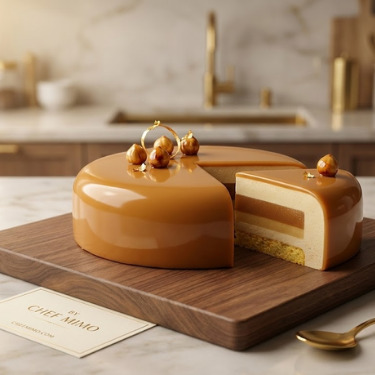
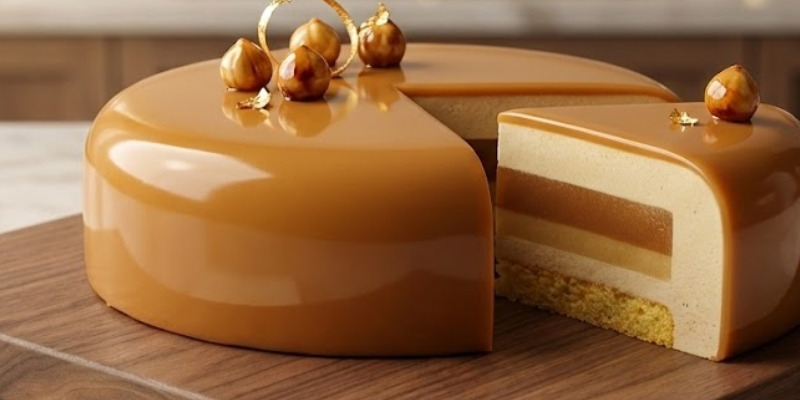
In the vast repertoire of French pastry, few combinations evoke comfort quite like Apple and Caramel. This entremet elevates that rustic pairing into a sleek, professional dessert designed for the Silikomart Universo Mold. It is a study in textures: the dense chew of the Pain de Gênes (Almond Sponge), the melting softness of Fondant Apples, the luscious coating of Caramel Crémeux, and the airy lightness of Caramel Chantilly.What makes this recipe distinctly professional is its "J-Minus" Schedule. You will notice steps labeled Day -2 and Day -1. This is how pastry chefs operate. By building the "Insert" (crémeux + apples) two days before, and the mousse and sponge one day before, you ensure that every element is perfectly set and frozen, making the final glazing (Day of Serving) stress-free and flawless.Why make this? It is the perfect bridge between a home-style apple pie and a boutique mousse cake. It teaches the delicate art of Dry Caramel—cooking sugar to the edge of burning to achieve deep amber notes—and the technique of Potato Starch Glazing, which creates a shine that is less rubbery than pure gelatin glazes.Ingredients
🔸 Caramel Crémeux (Make 2 days in advance):
- 2 egg yolks
- 60 g granulated sugar
- 18 g water
- 9 g glucose syrup
- 23 g + 97 g full-fat liquid cream
- 1.5 g gelatin ¾ sheet, 200 bloom
- A pinch of fleur de sel
🔸 Fondant Apples:
- 1 Golden apple
- 10 g granulated sugar
- 10 g unsalted butter
🔸 Pain de Gênes (Almond Sponge):
- 55 g almond paste
- 22 g sugar
- 1 whole egg
- 15 g cake flour T45
- 1 g baking powder
- 15 g butter
- 2 g milk
To make almond paste at home (if needed):
- 25 g almond flour
- 25 g icing sugar
- 5 g egg white
🔸 Caramel Chantilly:
- 300 g heavy cream cold
- 60 g sugar
- 35 g heavy cream warm
- 30 g butter
- 3 g gelatin sheets or powder
- A pinch of fleur de sel
🔸 Caramel Glaze:
- 145 g + 20 g granulated sugar
- 120 g water
- 120 g cream
- 12 g potato starch
- 4 g gelatin
Mastering Textures and Flavors📗 Download your PDF now!
Instructions
1️⃣ Caramel Crémeux (Day -2)
- Soak gelatin in cold water.
- In a saucepan, heat sugar, water, glucose, and fleur de sel until it turns a deep amber caramel.
- Separately, warm the 23 g cream and add it to the caramel carefully (it will bubble).
- Add the remaining 97 g cold cream to stop cooking.
- Off heat, add egg yolks and whisk until combined.
- Return to heat and cook gently to 84°C while stirring in a figure-8 motion.
- Off heat, add drained gelatin.
- Pour into a 14 cm ring lined at the bottom and sides (use acetate or foil for sealing).
- Let it cool slightly, then freeze until solid.
2️⃣ Fondant Apples (Day -2)
- Peel and dice the apple into small cubes.
- In a pan, melt butter and add apple and sugar.
- Cook on low until apples are soft and slightly caramelized.
- Let cool, then spread evenly over the frozen caramel crémeux, pressing down lightly.
- Freeze again until firm.
3️⃣ Pain de Gênes (Day -1)
- Preheat oven to 170°C (338°F).
- Melt butter with milk and set aside.
- Blend almond paste and egg until smooth using a stick blender.
- Whip the almond-egg mixture with sugar until light and fluffy (ribbon stage).
- Fold in the melted butter/milk mixture.
- Sift in the flour and baking powder, gently fold to combine.
- Pour into a 20 cm mold and bake for 12 minutes.
- Let cool and cut a 14 cm disk. Set aside.
4️⃣ Caramel Chantilly (Day -1)
- Soak gelatin in cold water.
- Warm the 35 g cream and set aside.
- In a saucepan, dry caramelize the sugar until golden.
- Slowly pour in the warm cream, whisking constantly.
- Add salt and butter, stir until fully melted.
- Strain if needed, then add gelatin and mix. Let it cool (don’t let it set).
- Whip the 300 g cold cream to medium peaks.
- Slowly pour in the cooled caramel while whipping gently.
- Fold the mixture with a spatula until smooth.
5️⃣ Assembly (Montage)
- Fill half the Universo mold with caramel chantilly. Tap to remove air bubbles.
- Unmold the frozen apple-caramel insert and place it center-down into the mold.
- Cover with remaining chantilly.
- Place the almond sponge disk on top and press lightly so it sits flush.
- Smooth the surface and freeze overnight (at least 8–10 hours).
6️⃣ Caramel Glaze (Day of Serving)
- Soak gelatin in cold water.
- Mix 20 g sugar with potato starch in a bowl.
- Heat water and cream together in a saucepan.
- Separately, caramelize 145 g sugar dry until golden.
- Off heat, carefully pour in the warm cream mixture while whisking.
- Return to heat and stir until smooth.
- Add sugar-starch mixture and boil for 1 minute to thicken.
- Off heat, add gelatin and blend with immersion blender (avoid air bubbles).
- Let cool to 28–30°C before glazing.
7️⃣ Glazing & Finishing
- Unmold the frozen entremet and place it on a glazing rack.
- Pour the caramel glaze evenly over the surface.
- Decorate with roasted hazelnuts or hazelnut skin shards for texture and elegance.
- Transfer to the fridge and thaw for at least 6 hours before serving.
Notes
The Science of Ingredients: Chemistry of Caramel and Starch
This recipe relies on precise chemical reactions for flavor and texture.1. Dry Caramel (The Maillard Reaction)
The recipe calls for "Dry Caramel" (heating sugar alone) rather than "Wet Caramel" (sugar + water).- The Science: Dry caramelization allows the sugar to reach higher temperatures faster, creating a more complex, slightly bitter flavor profile that cuts through the sweetness of the cream. When you deglaze this 170°C+ sugar with warm cream, you are arresting the cooking process instantly. The shock creates steam, but the fat in the cream emulsifies the burnt sugar into a smooth, rich sauce rather than a hard candy.
2. Potato Starch in Glaze
Unusually, the glaze uses Potato Starch mixed with sugar.- The Science: Most mirror glazes rely solely on gelatin or pectin. Adding potato starch provides viscosity (body) and a unique "short" texture. It makes the glaze cling to the curved sides of the Universo mold better than gelatin alone, which can sometimes be too runny. Starch also provides a specific sheen that looks natural and appetizing, less like "plastic" than glucose-heavy glazes.
3. Pain de Gênes (Almond Paste Sponge)
The sponge uses almond paste blended with eggs.- The Science: Unlike a standard sponge made with almond flour, Pain de Gênes starts with almond paste. By blending this dense paste with eggs, you create a stable emulsion rich in fat and nut oils. This results in a sponge that is incredibly moist, flexible, and dense—perfect for the base of an entremet as it won't dry out in the freezer.
4. Fleur de Sel (The Flavor Potentiator)
Every caramel component here includes Fleur de Sel.- The Science: Salt suppresses bitterness. Since we are pushing the caramel to a dark amber color for flavor depth, the salt is essential to mask the harsh bitter notes, allowing the buttery, toffee flavors to shine. It also triggers saliva production, making the dessert feel juicier on the palate.
Essential Professional Kitchen Tools
To execute the "J-Minus" plan, you need specific equipment.-
Silikomart "Universo" Mold
- Why you need it: This recipe is engineered for the rounded, pebble-like geometry of the Universo mold (approx 18cm or individual sizes). Its smooth curves require a glaze with perfect viscosity to coat evenly without pooling.
-
Immersion Blender (Stick Blender)
-
Why you need it: Non-negotiable for three steps:
- Almond Sponge: To break down the dense almond paste into the eggs without lumps.
- Caramel Glaze: To emulsify the starch and gelatin without adding air bubbles.
- Crémeux: To smooth out the custard base.
-
Why you need it: Non-negotiable for three steps:
-
Digital Thermometer
-
Why you need it: Precision is key.
- Crémeux: Must be cooked to 84°C (custard temperature).
- Glaze: Must be poured at 28–30°C. If poured at 35°C, it will melt the Chantilly.
-
Why you need it: Precision is key.
-
14cm Insert Ring
- Why you need it: You need to line a metal ring tightly with foil to hold the liquid crémeux until it freezes. This creates the internal core that is smaller than the main mold, ensuring a perfect cross-section of layers.
Expert Tips and Success Hacks
Master the timeline and techniques of a Chef.1. The "Deglazing" Danger Zone
Pouring liquid into hot caramel is dangerous.- The Hack: When you add the cream to the dry caramel, it will volcano (bubble up violently) and release superheated steam. Wear long sleeves. Pour the cream in 3 stages, stirring with a long-handled whisk. If the caramel seizes into hard rocks, don't panic—just put the pot back on low heat and stir; they will melt back down.
2. The Bubble-Free Glaze
Air bubbles ruin the mirror effect.- The Hack: When blending the glaze, keep the head of the immersion blender fully submerged and tilted slightly to the side. Do not lift it up and down. If you see bubbles on the surface after blending, pass the glaze through a fine-mesh sieve into a measuring jug and tap the jug on the counter to pop them.
3. Homemade Almond Paste
The recipe suggests making your own paste if needed.- The Hack: If you don't have store-bought 50% almond paste, blend 25g almond flour + 25g powdered sugar + 5g egg white. Process it until it forms a sticky ball. Use this base for your Pain de Gênes to ensure the correct texture.
4. Fondant Apple Texture
Apples release water when frozen.- The Hack: When sautéing the apples (Day -2), cook them until they are tender and dry. If they are swimming in juice, that juice will turn into ice crystals in the freezer, making the center of your cake crunchy (in a bad way) and watery when thawed. Cook the liquid off!
5. Glazing Temperature is Key
This glaze sets at a lower temperature than chocolate glazes.- The Hack: The target is 28°C to 30°C. Because it contains starch, it thickens differently. Do the "spoon test": dip a cold metal spoon into the glaze. It should coat the spoon smoothly (approx 2mm thick) and stop dripping quickly. If it runs off like water, cool it more.
Frequently Asked Questions (FAQ)
Q1: Can I use pears instead of apples? A: Absolutely. Pears and caramel are a classic combination. Choose firm pears (like Bosc or Conference) so they don't turn to mush when sautéed. You might want to add a splash of Poire Williams liqueur to the sauté step for extra aroma. Q2: What is "Potato Starch" vs. Cornstarch? A: Potato starch (Fécule de Pomme de Terre) has larger granules than cornstarch. It gelatinizes at a lower temperature and creates a clearer, glossier gel with a cleaner flavor. In a glaze, potato starch is superior. If you must use cornstarch, use slightly less (mix 15g instead of 20g), but the shine won't be quite as brilliant. Q3: Can I skip the J-2/J-1 schedule? A: No. You cannot glaze an entremet that isn't rock-hard frozen. You need at least 12 hours for the main cake to freeze solid. However, you can combine J-2 and J-1 into a single day: make the insert in the morning, freeze it (4-6 hours), then make the mousse and assemble in the evening, freezing overnight. Q4: How long does it take to thaw? A: This is a dense cake. It needs at least 6 hours in the fridge to thaw completely. If you serve it too early, the apple center might still be icy. Q5: My caramel cream split. Can I save it? A: Yes. If the fat separates from the liquid, add a splash of cold liquid cream and blend vigorously with your immersion blender. The shear force will re-emulsify the mixture. Tried this recipe?Let us know how it was!

I’m Chef Mimo, a passionate pastry chef with over 17 years of experience in the world of fine desserts. I specialize in French-style entremets, refined cakes, and creative chocolate work. Pastry is not just my profession—it’s my lifelong passion. Through PastryCrafted.com, I love sharing my recipes, techniques, and inspirations with anyone who dreams of mastering the art of pastry. Whether you’re a curious beginner or a seasoned pro, you’re welcome in my sweet world.