Apple Macarons Cider Caramel


Apple Macarons with Brie-Style Cider Caramel

(French Meringue shells + Vanilla Apple Compote + Whipped Cider Caramel)

A crisp almond shell with a chewy center, filled with vanilla apple compote and a creamy cider caramel that tastes like warm apples + salted caramel (without being overly sweet).

Yield: 20 macarons (40 shells)
Style: French macarons (French meringue method), filled macaron maturation style
Finish: Apple compote center + whipped cider caramel ring, sandwiched to the ruffle edge


Essential Equipment (What you actually need)

  • Digital scale (mandatory)

  • Stand mixer or hand mixer

  • Food processor (optional but helpful)

  • Fine sieve (important)

  • Rubber spatula (one stiff + one flexible if possible)

  • Piping bag + 9 mm plain round tip (Ateco 808-ish)

  • Silicone macaron mat or parchment (silicone mat gives more consistent feet)

  • Heavy baking sheets (double-pan helps prevent hollow shells)

  • Oven thermometer (US ovens vary a lot)

  • Small/medium saucepan + whisk

  • Instant-read thermometer (optional but useful for caramel + emulsions)

  • Immersion blender (optional; not required here but improves caramel smoothness)


Ingredient Notes (Why each one matters)

Macaron shells

  • Egg whites (93 g): Room temp whips more stable; no need to “age” for days.

  • Almond flour (125 g): Fine, dry, and fresh. If oily or coarse → cracked shells or weak feet.

  • Powdered sugar (125 g): Smooths texture; if lumpy → bumpy shells.

  • Granulated sugar (125 g): Stabilizes meringue and creates structure.

Cider caramel

  • Cider (170 g): Use a 4% ABV cider (hard cider). Alcohol boils off during reduction.

  • Cornstarch: Gives body quickly and helps prevent weeping.

  • Gelatin (1.5 g): Adds elastic stability so caramel whips nicely and holds shape.

  • Butter: Adds richness and “creaminess” in mouthfeel.

Apple compote

  • Firm apples: Better texture, less watery.

  • Vanilla bean: Adds “bakery” aroma that makes the filling taste expensive.


Component 1 — Macaron Shells (French Meringue)

Ingredients

IngredientAmount (g)US Approx
Egg whites93 g~3 large whites (varies)
Powdered sugar125 g~1 cup
Almond flour125 g~1 1/4 cups (depends on grind)
Granulated sugar125 g~1/2 cup + 2 Tbsp

Pro rule: For macarons, grams are the truth. US cups vary too much for almond flour.


Step A — Prep (10 minutes)

  1. Bring egg whites to room temp (1–3 hours on the counter).

  2. Line trays with a silicone mat or parchment.

  3. Fit piping bag with 9 mm round tip.

  4. Optional: print or place a 3.5 cm circle template under parchment (remove before baking).


Step B — Make the tant pour tant (dry mix)

  1. Combine almond flour + powdered sugar.

  2. Pulse in a processor 2–3 quick pulses max (do NOT warm it).

  3. Sift fully.

  4. If you have >1–2 Tbsp of large bits left, discard or reprocess briefly and re-sift.

Target texture: dry mix should look like fine sand.


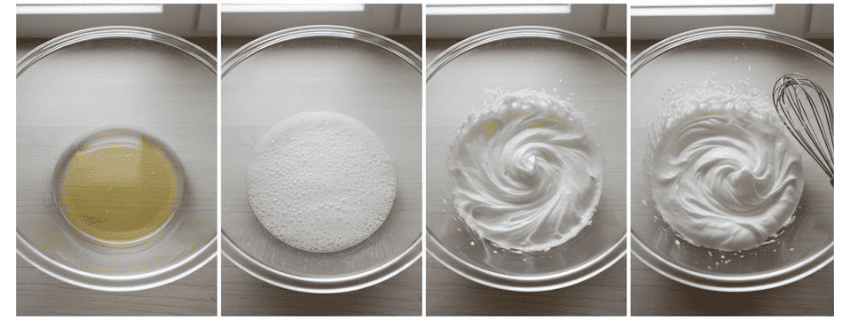
Step C — Make the French meringue

  1. Start whipping egg whites on medium speed until foamy.

  2. Add granulated sugar gradually (in 3–4 additions).

  3. Increase to high speed and whip to stiff peaks.

“Bird’s beak” test (your real checkpoint)

  • Lift whisk: peak stands up with a slight bend at the tip.

  • Meringue looks glossy and tight (not grainy).

  • If it looks dry or clumpy → overwhipped.


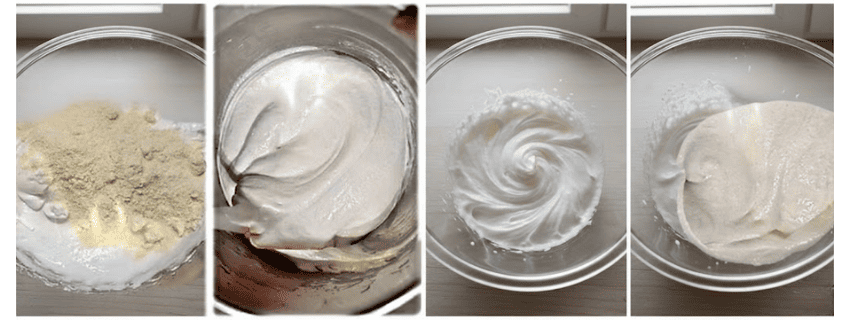
Step D — Macaronage (the most important step)

  1. Add all sifted dry mix to the meringue.

  2. Fold firmly: scrape around the bowl, then press batter against the side to deflate slightly.

  3. Continue until batter flows in a thick ribbon.

Correct consistency tests

  • Ribbon disappears back into itself in 10–20 seconds.

  • If it disappears instantly: too runny → flat shells.

  • If it stays piled: too stiff → cracks, no feet, nipples.

This is where most failures happen. Stop as soon as ribbon stage is reached.


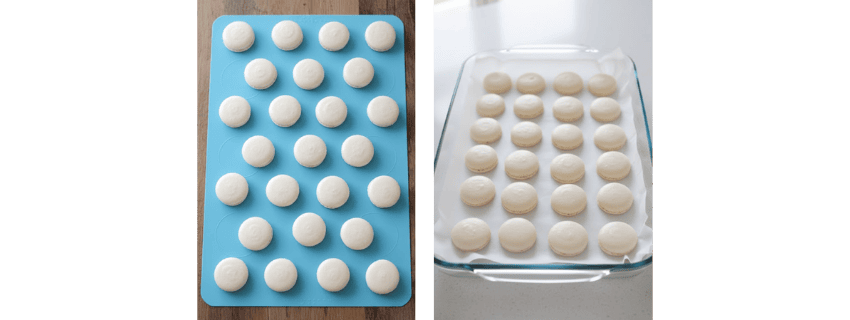
Step E — Piping and resting

  1. Pipe 3.5 cm rounds straight down, tip perpendicular to tray.

  2. Stop squeezing before lifting to avoid peaks.

  3. Tap tray firmly 8–12 times to release air bubbles.

  4. Pop visible bubbles with a toothpick.

  5. Rest until dry to the touch (30–60 minutes typical).

Dry-to-touch test

Gently touch the top: no stick, no wet batter on finger.


Step F — Baking (author used 120°C / 250°F)

Bake at 120°C / 250°F for 18–20 minutes, opening the door twice briefly to vent humidity.

US oven reality check

Many US ovens bake cooler or unevenly. If your macarons are:

  • Too pale / underbaked: try 265°F (130°C) for 18–20 min

  • Browning / cracked: lower temp to 245–250°F (118–121°C) and extend time

Doneness test (most reliable)

Try to gently nudge the top:

  • If the “cap” shifts or feels wobbly → needs more time.

  • If it feels firm and lifts cleanly after cooling → done.

Cool fully before removing.


Component 2 — Brie Cider Creamy Caramel (Make 1 day ahead)

Ingredients

IngredientAmountUS Approx
Granulated sugar120 g~1/2 cup + 2 Tbsp
Hard cider (4%)170 g~2/3 cup
Unsalted butter50 g~3.5 Tbsp
Cornstarch1 heaping Tbsp(about 10–12 g)
Heavy cream40 g~3 Tbsp
Gelatin1.5 gabout 3/4 tsp powdered gelatin (approx)

If using powdered gelatin: bloom it in 5x its weight in cold water (about 7–8 g water), 5–10 minutes.


Method (detailed)

Step 1 — Caramelize sugar

  1. Place sugar in a dry saucepan.

  2. Heat on medium, letting it melt gradually.

  3. Swirl the pan (don’t stir early) until deep amber.

Color target: deep amber (like dark honey).
Too light → too sweet. Too dark/black → bitter.


Step 2 — Add butter

Add cold butter (careful — it will bubble). Whisk vigorously until smooth.


Step 3 — Add cider and reduce

Slowly pour in cider (steam + splatter). Whisk smooth.

Simmer about 10 minutes to reduce.

  • You’re concentrating flavor and cooking off alcohol.

  • Target: slightly thicker and more aromatic.


Step 4 — Thicken with cornstarch slurry

Mix cornstarch with cold heavy cream until smooth (no lumps).
Whisk into the caramel and cook until it thickens.

Texture target: thick sauce that coats a spatula.


Step 5 — Add gelatin (off heat)

Remove from heat and add bloomed gelatin. Mix until fully dissolved.


Step 6 — Chill overnight

Transfer to a clean container, cover touching the surface, refrigerate overnight.


Next day: whip for piping

  1. Bring caramel to cool room temp (still thick).

  2. Whip briefly until lighter and slightly aerated.

  3. Pipeable texture: creamy, holds a ridge, not runny.

If it’s too stiff: warm 3–5 seconds in microwave, mix, try again.
If it’s too loose: chill 15–30 minutes.


Component 3 — Vanilla Apple Compote (Make 1 day ahead)

Ingredients

IngredientAmountNotes
Apples2firm, peeled, diced
Unsalted butter20 g
Vanilla bean1seeds + pod

Method (detailed)

  1. Peel apples, cut into very small dice (brunoise).

  2. Melt butter in a pan over medium heat.

  3. Add apples + vanilla seeds + pod.

  4. Cook until soft, glossy, and slightly jammy (water evaporated).

Important: Avoid watery compote. If it’s wet, keep cooking until moisture reduces.

  1. Remove vanilla pod.

  2. Blend briefly to smooth (keep some texture).

  3. Cover touching surface; chill.


Assembly (The right way for clean structure)

Step-by-step

  1. Pair shells of similar size.

  2. Pipe a small dot of apple compote in the center of half the shells.

  3. Pipe a ring of whipped cider caramel around the compote.

  4. Top with another shell and press gently until filling reaches the ruffle edge.

  5. Chill.


Maturation (Non-negotiable for best texture)

Macarons taste best after 24 hours in the fridge:

  • Shell becomes tender/chewy

  • Filling flavors blend

  • Texture becomes “macaron-perfect”


Storage & Shelf Life

  • Fridge: 3–4 days (airtight container)

  • Freezer: up to 3–4 weeks (airtight). Thaw overnight in fridge.

Avoid humidity: macarons absorb moisture and lose crispness.


Troubleshooting (the “why” behind failures)

Cracked tops

  • Batter under-macaronaged (too stiff)

  • Not rested long enough (skin too thin)

  • Oven too hot / hot spot

No feet

  • Over-macaronaged (too runny)

  • Meringue weak or underwhipped

  • Oven too cool

Hollow shells

  • Overwhipped/dry meringue

  • Oven too hot (shell sets before inside expands correctly)

  • Too much air trapped (not tapped enough)

Sticky bottoms

  • Underbaked

  • Too much moisture in oven (venting helps)

Runny caramel filling

  • Not reduced enough

  • Not chilled enough

  • Too warm during whipping


Timeline (Clean workflow)

Day 1

  • Make cider caramel → chill overnight

  • Make apple compote → chill overnight

Day 2

  • Make macaron shells

  • Whip caramel

  • Fill macarons

  • Chill 24 hours

Day 3

  • Best eating day

Leave a Reply

Your email address will not be published. Required fields are marked *