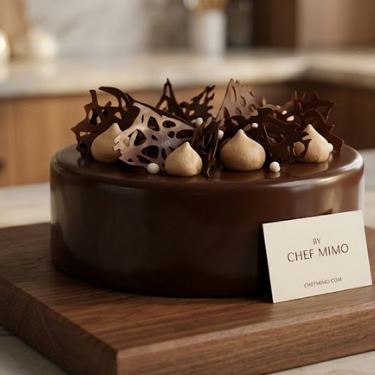
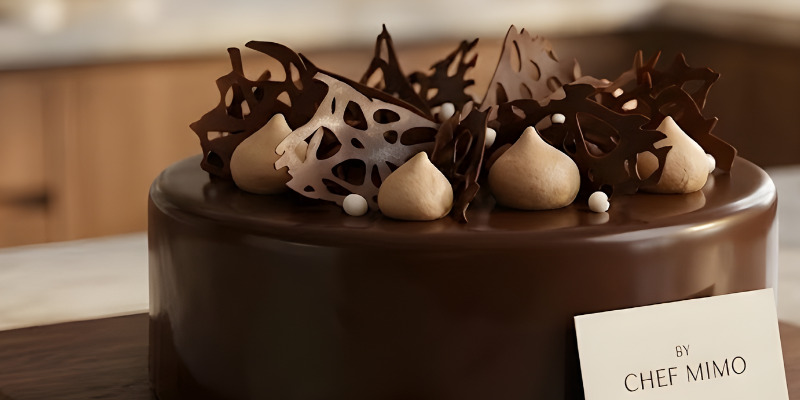
Bavarian Layer Cake with Chocolate Buttercream and Ganache Glaze
A Tribute to Bavaria: Introduction to the Prinzregententorte
If the Sachertorte is the king of Vienna, the Prinzregententorte is the prince of Munich. Named in honor of Prince Regent Luitpold of Bavaria, this cake is a masterpiece of precision. Tradition dictates it must have seven thin layers of sponge, symbolizing the seven administrative districts (Regierungsbezirke) of Bavaria.This dessert is an engineering feat. It stacks seven layers of airy Wiener Biskuit (Vienna Sponge) on a crisp Shortcrust Base, sealed with Apricot Jam. The filling is a rich Chocolate Buttercream infused with Grand Marnier, and the whole tower is robed in a glossy dark chocolate glaze.Why master this? It teaches the "Dobos" technique of baking individual sponge sheets rather than slicing a loaf. It also focuses on the stability of Swiss Meringue Buttercream (often mislabeled as French in older texts, but distinct in technique here) to hold the weight of the layers without bulging.Ingredients
🍪 Shortcrust Base
- 50 g butter
- 25 g powdered sugar
- 75 g spelt flour Type 630
- 1 pinch of salt
🍰 Sponge Layers Wiener Biskuit
- 4 eggs separated
- 100 g sugar
- 1 pinch of salt
- 50 g spelt flour Type 630
- 50 g cornstarch
- Zest of ½ orange
- 1 packet vanilla sugar
- 50 g butter melted (not hot)
🍯 Syrup
- 120 g water
- 60 g sugar
- 50 g Grand Marnier orange liqueur
🍫 Chocolate Buttercream French-style
- 500 g butter soft
- 200 g egg whites
- 200 g sugar
- 50 g water
- 1 pinch of salt
- 100 g dark chocolate minimum 70%, melted
🍑 Other Fillings & Layers
- 30 g apricot jam for base
🍫 Chocolate Glaze choose one
- Easy Option:
- 300 g dark chocolate min. 60%
- 30 g neutral vegetable oil
- Advanced Option tempered:
- 300 g dark chocolate min. 60%, tempered
🍰 Decoration
- Remaining chocolate buttercream
- Optional chocolate decorations
- Optional: candied orange zest or gold leaf
Mastering Textures and Flavors📗 Download your PDF now!
Instructions
Shortcrust Base
- Mix butter, powdered sugar, and salt until smooth. Add flour and knead until a homogeneous dough forms. Wrap and chill for 30 minutes.
- Roll out and cut a circle 18 cm in diameter. Bake at 170°C for 15 minutes until golden.
Sponge Layers
- Preheat oven to 200°C.
- Whip egg whites with salt and sugar until stiff. In a separate bowl, combine egg yolks, vanilla sugar, and orange zest. Gently fold yolks into meringue.
- Sift together flour and cornstarch, then fold into the egg mixture. Add melted (cooled) butter and gently incorporate.
- Divide the batter into three portions. Spread each onto a parchment-lined baking tray in thin, even circles (18 cm). Bake each for 8 minutes until lightly golden. Cool completely and cut 7 circles of 18 cm (reuse scraps if needed).
- Soaking Syrup
- Bring water and sugar to a boil. Cool, then add Grand Marnier. Set aside.
Chocolate Buttercream
- Whip softened butter until pale and fluffy.
- Heat egg whites, water, sugar, salt in a bowl over a water bath until 45°C while whisking constantly. Remove and whip until cooled and stiff.
- Add meringue gradually to whipped butter until smooth. Blend in the melted chocolate. Chill briefly if too soft.
Assembly
- Place the shortcrust base inside an 18 cm cake ring. Spread with a thin layer of apricot jam.
- Add the first sponge layer and brush generously with soaking syrup.
- Spread about 100 g of buttercream evenly over the layer.
- Repeat the process: sponge layer → syrup → buttercream, ending with a sponge layer on top.
- Cover and refrigerate overnight to firm up.
- The next day, remove from the ring. Warm the remaining buttercream to soften slightly and coat the outside of the cake. Smooth with a palette knife.
Chocolate Glaze
- Option 1 – Easy:
- Melt chocolate and oil to 45°C. Pour over the chilled cake, ensuring coverage. Immediately smooth the top and sides with a palette knife.
- Option 2 – Tempered:
- Temper the chocolate to 31–32°C. Pour and smooth as above for a snappy, professional finish.
Finishing Touches
- Fill a piping bag with a star tip (6 mm) and pipe decorative buttercream rosettes on top.
- Garnish each rosette with a fresh raspberry, chocolate piece, or candied zest.
- Chill the torte until serving. Best enjoyed within 4–5 days.
Notes
 The Science of Ingredients: Chemistry of the Seven Layers
To build a tower that slices cleanly, specific chemical interactions are required.
1. Wiener Biskuit (Vienna Sponge)
The sponge layers are Wiener Masse, not standard Genoise.- The Science: A standard sponge relies on egg foam. Vienna Sponge enriches this foam with melted butter added at the very end. The fat coats the flour proteins, restricting gluten formation. This creates a crumb that is finer and more tender than a standard sponge. Crucially, the butter must be added at 45°C. If too hot, it pops the air bubbles; if too cold, it sinks to the bottom.
2. Spelt Flour (Type 630)
The recipe specifies Spelt Flour (Dinkelmehl).- The Science: Spelt is an ancient grain with a protein structure that is more water-soluble than modern wheat. In delicate sponges, this creates a "melting" texture that lacks the rubbery elasticity of high-gluten flour. This ensures the seven layers remain tender, not chewy.
3. Swiss Meringue Buttercream
The recipe calls for heating egg whites, sugar, and water, then whipping in butter.- The Science: Although sometimes called "French-style" due to its richness, the technique of heating egg whites and sugar to 45°C over a water bath before whipping is classic Swiss Meringue. This heat denatures the egg proteins (ovalbumin), creating a rigid, stable foam that doesn't weep or curdle when butter is added. It is structurally stronger than American buttercream, essential for supporting a 7-layer cake.
4. Apricot Jam (The Moisture Barrier)
A thin layer of jam sits between the hard shortcrust base and the soft sponge stack.- The Science: This is structural. The shortcrust is crisp; the sponge is soaked in syrup. If they touched directly, gravity would pull the syrup down, turning the crust soggy. The high sugar density and pectin in the jam act as a hydrophobic seal, preserving the crunch of the base.
Essential Professional Kitchen Tools
To achieve the "Regal" look, you need tools for precision spreading.-
Offset Spatula (Palette Knife)
- Why you need it: Essential for spreading the sponge batter into paper-thin 18cm circles before baking. A spoon cannot achieve the uniform thickness required for the layers to bake evenly in just 8 minutes.
-
Cake Ring (18cm)
- Why you need it: You cannot assemble a 7-layer cake freehand. The ring acts as a mold, forcing the layers to stack vertically. Without it, the cake would likely lean or bulge.
-
Digital Thermometer
-
Why you need it:
- Buttercream: Egg whites must reach 45°C to dissolve sugar and ensure stability.
- Glaze: If tempering, you must hit exact temperatures (31°C-32°C) to ensure a glossy snap.
-
Why you need it:
-
Pastry Brush
- Why you need it: To apply the Soaking Syrup. Pouring syrup leads to soggy spots. A brush distributes the Grand Marnier syrup evenly, ensuring every millimeter of the sponge is moist but not wet.
Expert Tips and Success Hacks
Construct your seven layers with these professional secrets.1. The "Dobos" Spreading Method
Baking 7 individual layers is time-consuming but necessary.- The Hack: Draw seven 18cm circles on pieces of parchment paper (use your cake ring as a template, then flip the paper over). Weigh the batter and divide it by 7 to ensure every layer is exactly the same thickness. Spread the batter to the edges of your drawn circles.
2. Syrup Temperature
- The Hack: Apply warm syrup to cooled sponge layers. The temperature difference helps the sponge absorb the liquid instantly through capillary action. If both are cold, the syrup sits on top; if both are hot, the sponge turns to mush.
3. The Overnight Press
The cake needs to fuse.- The Hack: Do not glaze this cake the same day you assemble it. It must rest in the fridge (in the ring) overnight. This allows the moisture from the syrup and cream to migrate evenly through the sponge (osmosis), creating a cohesive bite where the layers feel like one unified cake rather than a stack of pancakes.
4. Glazing a Cold Cake
- The Hack: When pouring the chocolate glaze (whether oil-based or tempered), the cake must be cold. This sets the chocolate quickly, preventing it from mixing with the buttercream underneath. Move fast—you have about 10 seconds to smooth the top!
5. Cutting the Shortcrust
- The Hack: The shortcrust base is harder to cut than the sponge. When serving, use a sharp, hot knife and use a distinct sawing motion when you hit the bottom layer to get through the crust without squashing the delicate sponge layers above.
Frequently Asked Questions (FAQ)
Q1: Can I make this alcohol-free? A: Yes. Replace the Grand Marnier in the syrup with Orange Juice or a vanilla syrup. The orange zest in the sponge will still provide that classic citrus note that cuts through the rich chocolate. Q2: Why 7 layers? Can I do fewer? A: Tradition dictates seven for the Bavarian districts. However, 5 or 6 layers are acceptable if oven space is limited. Ensure the ratio of cream to sponge remains balanced. If layers are too thick, it loses the refined texture. Q3: My buttercream separated (curdled). What do I do? A: This happens if the butter was too cold compared to the meringue. To fix it, scoop out a small portion, melt it in the microwave, and pour it back into the whipping mixer. The heat will re-emulsify the fats. Q4: Can I use ganache instead of buttercream? A: Traditionally, Prinzregententorte uses chocolate buttercream. Ganache is denser. If you use ganache, the cake will be heavier and harder to slice cleanly. Stick to buttercream for the authentic "melting" texture. Q5: How long does it keep? A: This cake improves after 24 hours.- Storage: Keeps well for 4-5 days in the fridge. The glaze acts as a seal.
- Serving: Always serve at room temperature. Cold buttercream tastes waxy; room-temp buttercream tastes airy.
Tried this recipe?Let us know how it was!

I’m Chef Mimo, a passionate pastry chef with over 17 years of experience in the world of fine desserts. I specialize in French-style entremets, refined cakes, and creative chocolate work. Pastry is not just my profession—it’s my lifelong passion. Through PastryCrafted.com, I love sharing my recipes, techniques, and inspirations with anyone who dreams of mastering the art of pastry. Whether you’re a curious beginner or a seasoned pro, you’re welcome in my sweet world.