
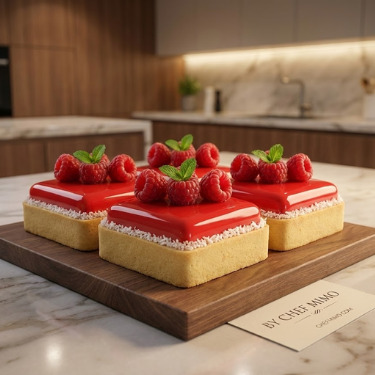
Cheesecake Raspberry Tartlets with Mirror Glaze and Coconut Biscuit
A Study in Tang and Texture: Introduction to the Cheesecake Tartlet
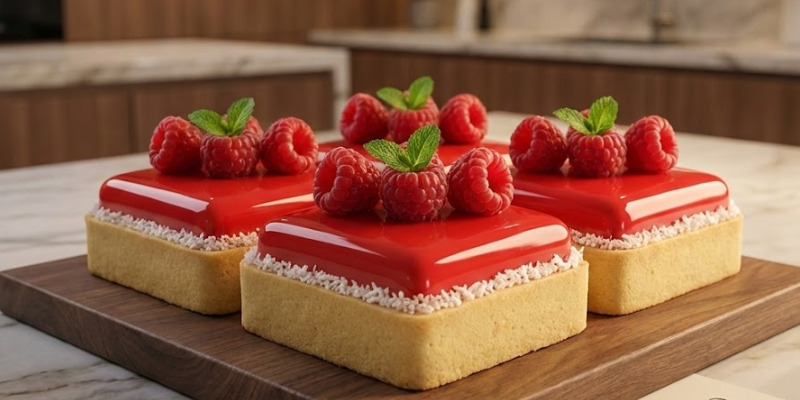
The Cheesecake Raspberry Tartlet is a hybrid dessert that bridges the gap between a classic New York cheesecake, a French fruit tart, and a modern entremet. It is designed to be a showpiece, moving beyond the simple slice to offer a complex, individual architectural experience.This dessert features five distinct textures:The Crisp: A buttery Pâte Sucrée shell.The Chew: An Almond Coconut Biscuit hidden inside.The Surprise: A pocket of liquid Raspberry Gelée inside the biscuit.The Body: A rich, lemon-scented Cheesecake Mousse.The Crown: A frozen Raspberry Mousse dome, robed in a shiny Mirror Glaze.Why make this? It solves the "heaviness" problem of traditional cheesecake. By aerating the cream cheese into a mousse and pairing it with the sharp acidity of raspberry and the tropical note of coconut, the result is light and refreshing. It is a masterclass in assembly mechanics, teaching you how to hide liquid centers within solid cakes.Ingredients
Raspberry Mousse
- 60 g raspberry purée
- 72 g milk
- 72 g whipping cream
- 10 g sugar
- 42 g raspberry couverture Valrhona Inspiration Framboise or white chocolate
- 2½ gelatin sheets
- 120 g whipped cream
Almond Coconut Biscuit
- 30 g finely ground blanched almonds
- 20 g sugar Part I
- 1 whole egg
- 1 egg yolk
- 2 egg whites
- 22 g sugar Part II
- 35 g all-purpose flour
- 2 tbsp shredded coconut
Mirror Glaze
- 120 g glucose syrup
- 120 g sugar
- 60 g water Part I
- 80 g sweetened condensed milk
- 100 g white chocolate couverture chopped or callets
- 8 g powdered gelatin
- 48 g water Part II
Red gel food coloring
- Pâte Sucrée Sweet Shortcrust Pastry
- 75 g soft butter
- 50 g powdered sugar
- 15 g ground almonds
- Seeds from ½ vanilla pod
- 130 g all-purpose flour
- 1 egg yolk mixed with a little egg white, if needed
- Pinch of salt
Raspberry Gelée
- 100 g raspberry purée
- 5 g lemon juice
- 15 g sugar
- 2 g pectin
Cheesecake Mousse
- 200 g cream cheese
- 60 g sugar
- Zest of 1 organic lemon
- Juice of ½ organic lemon
- 2 egg yolks
- 2½ gelatin sheets
- 220 g whipped cream
Mastering Textures and Flavors📗 Download your PDF now!
Instructions
Raspberry Mousse
- Soak the gelatin in cold water. Heat milk, cream, raspberry purée, and sugar. Remove from heat, add gelatin, and stir until fully dissolved. Pour over the raspberry couverture and let sit briefly, then emulsify with a spatula or hand blender. Cool to 30°C, then gently fold in whipped cream. Pour into silicone molds and freeze overnight.
Almond Coconut Biscuit
- Preheat oven to 180°C (356°F), top and bottom heat.
- Whisk egg, yolk, sugar (Part I), and almonds until pale and thick. In another bowl, whip the egg whites with sugar (Part II) until stiff. Gently fold into the egg-almond mixture along with sifted flour and coconut. Spread into a 1 cm thick layer on a silicone mat or baking tray lined with parchment. Bake for about 20 minutes. Let cool.
Mirror Glaze
- Soak the powdered gelatin in water (Part II). Bring glucose, sugar, and water (Part I) to a boil, remove from heat at 103°C, stir in condensed milk and softened gelatin. Pour over chocolate and let rest. Add red food coloring and blend with a stick blender (keep it under the surface to avoid air bubbles). Cover with cling film directly touching the surface and refrigerate overnight.
Pâte Sucrée
- Cream butter and powdered sugar. Add almonds, vanilla, flour, yolk, and salt. Mix quickly to a smooth dough. Wrap in plastic and refrigerate for at least 2 hours.
- Roll to 3–4 mm thick, line tart rings, and freeze for 15 minutes. Preheat oven to 180°C. Bake tart shells for about 20 minutes until golden. Let cool.
Raspberry Gelée
- Mix half the sugar with pectin. Heat raspberry purée, remaining sugar, and lemon juice. Stir in the pectin-sugar mix and simmer gently for 2 minutes. Cool until spreadable but not fully set.
Cheesecake Mousse
- Soak gelatin. Whisk yolks with 30 g sugar. Heat half the cream cheese with lemon juice, then gradually whisk into yolk mixture. Return to the pan and cook gently (max 82°C) until slightly thickened. Remove from heat, stir in gelatin. Mix remaining cream cheese with sugar and lemon zest, then combine with the warm mixture. Chill to 20°C. Whip the cream and fold in.
🧩 Assembly and Decoration
- Cut 6 cm squares from the almond biscuit. Use a small round cutter (1.5–2 cm) to create a center hole. Place the biscuit into the tart shell and fill the hole with raspberry gelée. Refrigerate until set.
- Fill tartlets with cheesecake mousse and smooth the tops. Refrigerate until set.
- Warm the mirror glaze to 45°C, then cool to 35°C for use. Unmold the raspberry mousse inserts, place them on inverted glasses, and pour over the glaze. Trim excess.
- Carefully transfer glazed mousse domes onto the tartlets. Optionally decorate the edges with shredded coconut and top with a fresh raspberry.
Notes
 The Science of Ingredients: Chemistry of Cheese and Couverture
To achieve these light textures with heavy ingredients, specific chemical interactions are required.
1. Cream Cheese "Anglaise"
The Cheesecake Mousse recipe is unusual: it heats the cream cheese with egg yolks.- The Science: Traditional cheesecake is baked to set the eggs. No-bake cheesecake is usually just whipped cream cheese. This recipe uses a hybrid method: cooking half the cream cheese with egg yolks to 82°C (like a Crème Anglaise). This denatures the egg proteins, creating a stable custard structure that holds the mousse together without baking. It also pasteurizes the yolks, making the mousse safe to store for days.
2. Valrhona Inspiration (Fruit Couverture)
The Raspberry Mousse calls for "Raspberry Couverture" (or white chocolate).- The Science: Valrhona Inspiration is a game-changer in pastry. It is made of cocoa butter, sugar, and freeze-dried fruit powder—no dairy solids. Because it contains no water, it behaves exactly like chocolate (it crystallizes and sets hard). This provides structure to the mousse that fruit puree alone cannot, delivering an intense, punchy acidity that white chocolate (which is mostly sugar and milk powder) often dilutes.
3. Pectin vs. Gelatin
The recipe uses Pectin for the Gelée and Gelatin for the Mousse.-
The Science:
- Gelatin (Protein): Forms an elastic mesh. Essential for the mousse to hold air bubbles and freeze/thaw without weeping.
- Pectin (Carbohydrate): Forms a "short" gel (like jam). We use it in the gelée core because we want it to feel like a sauce that melts on the tongue, not a rubbery gummy bear. Pectin releases flavor faster than gelatin.
4. Coconut Fiber (Texture Contrast)
The biscuit uses shredded coconut.- The Science: Coconut is high in fiber and fat but low in hydration absorption compared to flour. In the almond biscuit, the coconut flakes create a "interruptive" texture. They don't dissolve. This ensures that even when soaked in the moisture from the mousse and gelée, the biscuit retains a distinct, chewy bite rather than turning into mush.
Essential Professional Kitchen Tools
To build the "hidden center," you need precise tools.-
Small Round Cutter (1.5–2 cm)
- Why you need it: To create the "well" for the raspberry gelée. After baking the square almond-coconut biscuits, you punch a hole in the center. This hole creates the reservoir for the jam, ensuring it stays centered inside the tart rather than squishing out the sides.
-
Silicone Dome Molds (for Raspberry Mousse)
- Why you need it: The top layer is a "Reverse Assembly." You pour liquid mousse into a mold and freeze it rock solid. This is the only way to glaze it. You cannot pour mirror glaze over soft, piped mousse—it would melt and collapse.
-
Immersion Blender
- Why you need it: For the Mirror Glaze and Cheesecake Mousse. When mixing the warm cream cheese custard with the remaining cold cheese, lumps can form. A stick blender ensures a silky smooth finish. For the glaze, it removes air bubbles that ruin the shine.
-
Digital Thermometer
-
Why you need it:
- Cheesecake Base: Must not exceed 82°C (or the cheese/yolks will curdle).
- Glaze: Must be poured at 35°C.
- Sugar Syrup (Glaze): Must boil to 103°C to ensure the water content is correct for setting.
-
Why you need it:
Expert Tips and Success Hacks
Achieve the architectural layers with these professional secrets.1. The "Biscuit Dam" Technique
How do you keep the liquid gelée inside?- The Hack: Place the square biscuit (with the center hole) into the baked tart shell first. Then, pipe the raspberry gelée into the hole. The tart shell bottom acts as the floor, and the biscuit acts as the walls. This contains the fluid gel without it leaking into the mousse.
2. Glaze Temperature Precision
Mirror glaze is temperamental.-
The Hack: The target is 35°C.
- >40°C: The glaze is too thin and will melt the frozen mousse dome, sliding off and leaving bald spots.
- <30°C: The glaze is too thick and will sit like a heavy rubber blanket.
- Test: Dip a frozen metal spoon into the glaze. It should coat it evenly (2mm thick) and stop dripping within seconds.
3. Emulsifying the Raspberry Mousse
Acidic fruit can curdle dairy.- The Hack: The recipe adds gelatin to the hot puree, then pours it over the chocolate. Ensure you emulsify this base well (make a ganache) before folding in the whipped cream. If the fruit base is too hot (>35°C), it will deflate the cream. If too cold (<20°C), the gelatin chunks. Aim for 30°C for the perfect fold.
4. Preventing Tart Shrinkage
Pâte Sucrée can shrink in the oven.- The Hack: After rolling and lining your rings, freeze the raw tart shells for 15-20 minutes before baking. This relaxes the gluten and hardens the butter. A frozen shell hits the hot oven and "sets" its shape instantly before it has time to slump.
5. Clean Glazing Edges
Drips look messy.- The Hack: After glazing the frozen mousse domes on a rack, let them drip for 2 minutes. Then, use a small offset spatula or knife to "shave" the drips off flush with the bottom of the dome before lifting it. This ensures the dome sits flat on the tart without a messy pool of glaze at the connection point.
Frequently Asked Questions (FAQ)
Q1: Can I use white chocolate instead of Raspberry Inspiration? A: Yes. However, white chocolate is sweeter and lacks the acidity of the fruit couverture. To compensate, reduce the sugar in the mousse recipe to zero and consider adding a teaspoon of freeze-dried raspberry powder or a squeeze of lemon juice to boost the flavor. Q2: Can I make the components ahead? A:- Frozen Mousse Domes: Can be kept frozen for 2 weeks.
- Tart Shells: Can be baked 2 days ahead (store airtight).
- Assembly: Once glazed and assembled, the tartlets are best eaten within 24 hours. The glaze loses its shine after day 2, and the biscuit eventually softens.
Tried this recipe?Let us know how it was!

I’m Chef Mimo, a passionate pastry chef with over 17 years of experience in the world of fine desserts. I specialize in French-style entremets, refined cakes, and creative chocolate work. Pastry is not just my profession—it’s my lifelong passion. Through PastryCrafted.com, I love sharing my recipes, techniques, and inspirations with anyone who dreams of mastering the art of pastry. Whether you’re a curious beginner or a seasoned pro, you’re welcome in my sweet world.