
Chocolate Layer Cake: A Masterclass in Vertical Indulgence


Chocolate Layer Cake

Beyond the Entremet: Introduction to the Chocolate Layer Cake

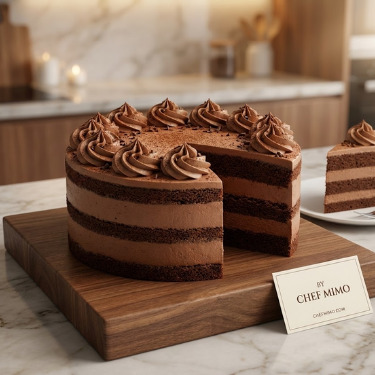
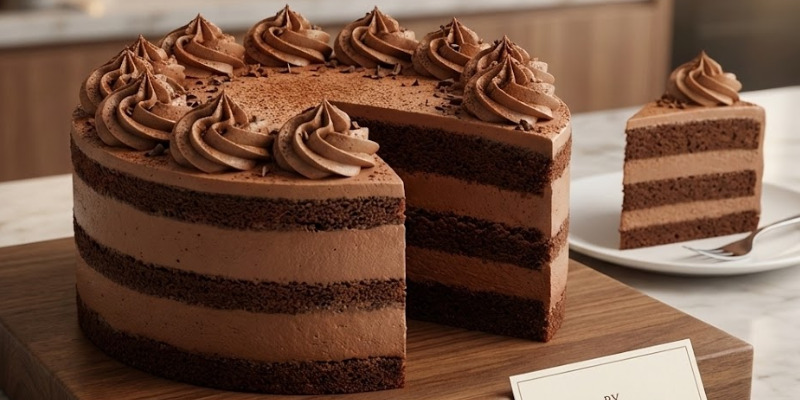
While the entremet is the jewel of the display case, the Layer Cake is the centerpiece of the celebration. This recipe bridges the gap between American-style tall cakes and French finesse. Instead of dense, butter-heavy sponges and sugary American buttercream, this cake utilizes a feather-light Cocoa Chiffon Cake and a sophisticated Whipped Milk Chocolate & Mascarpone Ganache.
The structure is engineered for balance. The sponge is airy and oil-based (staying soft when chilled). The filling is a double-threat: a lush whipped ganache frosting and hidden cores of intense Dark Chocolate Crémeux made with Valrhona Guanaja 70%.
Why make this? It solves the "dry cake" problem. By using a chiffon base and frozen crémeux inserts, you achieve a cake that is sliceable and impressive but melts on the palate like a mousse. It creates a rhythm of textures: soft sponge, airy ganache, dense creamy truffle center.
Servings 12 people

Ingredients
  

Dark Chocolate Crémeux

  • 160 g whole milk
  • 160 g heavy cream 30% fat
  • 4 egg yolks
  • 16 g granulated sugar
  • 160 g 70% dark chocolate Valrhona Guanaja
  • Milk Chocolate & Mascarpone Whipped Ganache
  • 420 g heavy cream 30% fat
  • 310 g milk chocolate Valrhona Jivara
  • 500 g mascarpone cheese

Cocoa Chiffon Cake

  • 130 g all-purpose flour
  • 20 g unsweetened cocoa powder
  • 5 g baking powder
  • 2 g salt
  • 80 g + 30 g granulated sugar divided
  • 3 eggs
  • 45 g neutral oil grape seed or sunflower
  • 70 g whole milk
Mastering Textures and Flavors📗 Download your PDF now!

Instructions
 

Preparation Notes

  • Prepare the dark chocolate crémeux and the ganache the day before assembling your layer cake.
  • The chiffon cake can be made the same day or the day before—store it in an airtight cake container so it doesn’t dry out.

Dark Chocolate Crémeux

  • Start by preparing a crème anglaise: heat the cream and milk together until boiling.
  • In a separate bowl, whisk the egg yolks and sugar.
  • Pour the hot milk–cream mixture over the yolks while whisking.
  • Return everything to the saucepan and cook gently to 82°C, or until it coats the back of a spatula.
  • Pour the crème anglaise over the chopped dark chocolate. Let sit for 5–10 minutes so the chocolate melts gently.
  • Stir with a spatula until smooth and glossy.
  • Divide the crémeux into two equal portions of approx. 260 g each.
  • Pour each half into a 14 cm ring lined on the bottom with cling film to prevent leakage.
  • Freeze until solid.
  • 💡 If you only have one 14 cm ring, freeze the first insert, unmold and store it in the freezer, then reuse the ring for the second portion.

Milk Chocolate & Mascarpone Ganache

  • Bring the cream to a boil.
  • Pour it in three additions over the chopped milk chocolate, stirring between each.
  • Blend with an immersion blender until smooth and glossy.
  • Cover with cling film touching the surface and refrigerate overnight.
  • Do not add the mascarpone until assembly day.

Cocoa Chiffon Cake

  • Preheat oven to 150°C (fan-assisted).
  • Sift together the flour, cocoa, baking powder, and salt. Add 80 g of sugar and mix.
  • Separate the egg yolks and whites.
  • In a mixer, beat the egg whites, gradually adding the remaining 30 g of sugar, until they form soft peaks (don’t overbeat—they should be foamy but not stiff).
  • In another bowl, whisk the yolks with oil and milk.
  • Add the liquid mix to the dry ingredients and stir gently with a spatula.
  • Fold in the egg whites carefully using a spatula. Stop once the mixture is homogeneous.
  • Pour into the ungreased 18 cm cake ring or pan. This is crucial—the batter needs to cling to the sides to rise properly.
  • Bake for 1 hour at 150°C. Your ring must be at least 6 cm tall to avoid overflowing.
  • Once baked, let cool, then unmold carefully by sliding a thin spatula or knife around the edge.

Assembly

  • Whip the ganache using a stand mixer fitted with a whisk. Start on high speed.
  • Once it starts to thicken and lighten in color, add half the mascarpone. Continue whisking.
  • Add the remaining mascarpone and whip until you have a firm, pipeable ganache.
  • Set aside one-third of this ganache to frost and decorate the cake.
  • Slice your chiffon cake into 3 even layers. If the top is domed, trim it to level the layers.
  • Use the bottom of the cake (the flattest part) as the top of your layer cake.
  • Place one cake layer directly onto your serving plate to avoid moving it later.
  • Spread a layer of whipped ganache.
  • Place one frozen chocolate crémeux disk in the center. Having the insert frozen makes this step much easier.
  • Add a second layer of ganache, smooth it, then place the next cake layer.
  • Repeat the process and finish with the final cake layer, flattest side facing up.
  • Fill in any gaps around the sides with reserved ganache.
  • Use a spatula to smooth the exterior and decorate as you wish.

Notes
The Science of Ingredients: Chemistry of Cocoa and Air

To build a tall cake that doesn't collapse or taste dry, specific chemistry is required.

1. Cocoa Chiffon Mechanics (Oil vs. Butter)

The sponge uses 45g of neutral oil, not butter.
  • The Science: Cocoa powder is a drying agent (it absorbs liquid). If you used a butter-based pound cake recipe with cocoa, it would harden into a brick in the refrigerator. Oil remains liquid at 4°C. This ensures the cake remains incredibly moist and tender even after hours in the fridge, which is necessary to keep the ganache stable.

2. Valrhona Guanaja 70% (The Intensity Anchor)

The crémeux insert uses 70% dark chocolate.
  • The Science: A layer cake covered in milk chocolate ganache runs the risk of being cloying. The insert acts as a "bitterness anchor." The high cocoa solid content of the 70% chocolate cuts through the fat of the mascarpone and the sugar of the milk chocolate, resetting the palate with each bite. It also provides a denser texture than the surrounding mousse-like ganache.

3. Mascarpone Ganache (The Structure)

The frosting uses 500g of Mascarpone.
  • The Science: Standard whipped ganache (chocolate + cream) can be unstable at room temperature. Mascarpone is approx 40% fat. By blending this high-fat cheese with the cocoa butter in the Jivara chocolate, we create a composite fat network. This structure is rigid enough to pipe and hold up a 3-layer cake, yet has a cleaner melt-in-the-mouth feel than buttercream.

4. The "Ungreased" Pan

The recipe emphasizes: "Pour into ungreased ring... crucial."
  • The Science: Chiffon cakes rise by climbing. The protein structure of the egg whites physically grips the microscopic pores of the metal pan to pull itself up. If you grease the pan, the batter slips, fails to rise, and collapses into a dense puck.

Essential Professional Kitchen Tools

To achieve the clean layers and flat top, you need the right hardware.
  1. 14cm Insert Rings
    • Why you need it: The cake is 18cm, but the crémeux inserts are 14cm. This 2cm "buffer zone" of ganache ensures the heavy dark chocolate center doesn't leak out the sides of the cake. It creates a neat "bullseye" effect when sliced.
  2. Immersion Blender
    • Why you need it: For the Ganache Base. Milk chocolate is prone to separating or becoming grainy if whisked too vigorously while hot. An immersion blender ensures a silky, stable emulsion before the overnight rest.
  3. Tall Cake Ring (Aluminum)
    • Why you need it: A standard 5cm cake pan isn't tall enough. Chiffon cakes rise high. A tall (6cm+) aluminum ring ensures the cake rises evenly without mushrooming over the top.

Expert Tips and Success Hacks

Achieve a bakery-quality finish with these assembly secrets.

1. The "Frozen Disc" Assembly

Spreading ganache over liquid crémeux is impossible.
  • The Hack: The crémeux must be frozen rock-solid discs. When you place the frozen disc onto the ganache layer, it is rigid and easy to center. It also keeps the ganache layer underneath cold and firm. It will thaw perfectly inside the cake within 2 hours.

2. Cooling Upside Down

Chiffon cakes are fragile when hot.
  • The Hack: Immediately after baking, flip the pan upside down and let it cool in this inverted position (prop the edges on cans if using a ring). Gravity stretches the cake downward (technically upward relative to the top), preventing the delicate foam structure from collapsing on itself while the starches set.

3. Whipping Ganache "A La Minute"

Don't overwhip the mascarpone.
  • The Hack: When whipping the chilled ganache base with mascarpone, stop the moment you see firm tracks from the whisk. Mascarpone curdles instantly if over-beaten. If the mixture looks grainy, you went too far. It is better to slightly under-whip (it will firm up in the fridge) than over-whip.

4. The "Bottom is Top" Rule

How to get a flat top without wasting cake.
  • The Hack: When you slice your chiffon sponge into 3 layers, reserve the bottom layer (the one that touched the baking tray). Use this as the top layer of your assembled cake, flipped over. It is perfectly flat and has a tight crumb, making it the perfect canvas for your final smoothing of ganache.

5. No Crunch Layer?

The recipe advises against a full crunch disk.
  • The Hack: A solid disk of praline/feuilletine becomes very hard when refrigerated. When you try to slice a soft chiffon cake with a hard crunch layer, the pressure squashes the cake before the knife cuts the crunch. If you want texture, sprinkle loose Chocolate Pearls (Valrhona) between the layers instead. They provide crunch without structural resistance.

Frequently Asked Questions (FAQ)

Q1: Can I make this with dark chocolate ganache instead? A: Yes, but dark chocolate sets harder. You will need to adjust the ratio: increase the liquid cream slightly to prevent the frosting from becoming too stiff to spread. Using dark chocolate for both the insert and the frosting might make the cake very intense.
Q2: How long does it take to thaw? A: Because of the frozen crémeux inserts, the assembled cake needs at least 2 to 3 hours in the fridge before serving. If you slice it too early, the center will be an ice block.
Q3: Can I freeze the sponge? A: Yes. Chiffon cake freezes beautifully. Wrap the cooled layers tightly in plastic wrap. You can even assemble the cake with frozen sponge layers; it makes spreading the ganache easier as fewer crumbs detach.
Q4: Why did my Chiffon cake fall out of the pan? A: If you cooled it upside down and it fell out, it means you likely greased the pan (even a little bit) or used a non-stick pan. The batter must stick firmly to the metal to defy gravity.
Q5: My Ganache is grainy. Can I save it? A: If it's just slightly grainy, you can try melting a small amount of chocolate and folding it in, but usually, grainy mascarpone means the emulsion has broken into butter. It's best to restart or use it for a filling where texture matters less, rather than the final coat.
Tried this recipe?Let us know how it was!
Leave a Reply

Your email address will not be published. Required fields are marked *

Recipe Rating