
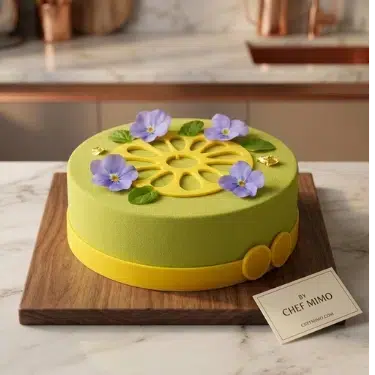
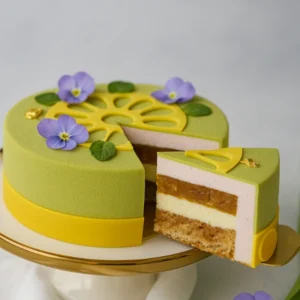
Cosima – Pineapple & Strawberry Cake with Namelaka, Compote, and Coconut Crunch
A Garden of Exotic Flavors: Introduction to "Cosima"
If winter desserts are about comfort and chocolate, "Cosima" is the herald of spring. This Pineapple & Strawberry Entremet is a study in botanical pastry, moving beyond simple fruit pairings to explore aromatic complexity. It combines the tropical sweetness of pineapple, the familiar tartness of strawberry, and the surprising, citrusy heat of Timut Pepper.Structurally, this cake is a "Petit Gateau" or Entremet that defies heaviness. It replaces traditional buttercreams with a Greek Yogurt Mousse, lightening the palate. The core features a Pineapple Namelaka—ultra-creamy yet egg-free—layered with a chunky Pineapple Compote. It all rests on a moist Muscovado Sponge and a shattering Coconut Crispy Base.Why is this recipe a masterclass worthy of your kitchen? It teaches you how to balance sugar with spice (Timut), how to work with difficult enzymes (Bromelain in pineapple), and how to build texture using alternative sugars like Muscovado. It is sophisticated, refreshing, and visually stunning with its velvet spray finish.Ingredients
Pineapple Namelaka
- 45 g sweetened pineapple purée
- 45 g milk
- 1.5 gelatin leaves 2.6 g
- 90 g white chocolate
- 100 g cold liquid cream
Pineapple Compote with Timut Pepper
- 60 g diced pineapple
- 60 g diced physalis
- 1 tbsp lime juice
- 150 g sweetened pineapple purée
- 1.5 g Timut pepper crushed & sifted
- 20 g sugar
- 2 gelatin leaves 3.4 g
Pineapple-Muscovado Sponge
- 1 small egg 40 g
- 40 g muscovado sugar
- 50 g fresh pineapple
- 40 g flour
- 1 tsp baking powder
- 10 g almond flour
- 12 g shredded coconut
- 30 g neutral oil rapeseed or sunflower
Coconut Crispy Base
- 50 g shortbread crumbs
- 20 g almond butter
- 40 g white chocolate
- 30 g crêpes dentelle
- 10 g shredded coconut
- Pinch of salt
Pineapple-Strawberry Mousse
- 100 g sweetened pineapple purée
- 80 g unsweetened strawberry purée
- 15 g lime juice
- 40 g sugar
- 6 gelatin leaves 10 g
- 140 g Greek yogurt 10% fat
- 200 g whipping cream
Mastering Textures and Flavors📗 Download your PDF now!
Instructions
Pineapple Namelaka
- Soak gelatin in cold water.
- Heat milk and pineapple purée separately.
- Dissolve gelatin in hot milk, pour over melted white chocolate.
- Blend with stick blender, adding pineapple purée and cold cream gradually.
- Chill in fridge until set.
Pineapple Compote
- Soak gelatin.
- Simmer all ingredients (except gelatin) for 8–10 min.
- Add gelatin, blend briefly (leave some texture).
- Pour into a 16 cm Tortaflex mold. Freeze.
Sponge
- Preheat oven to 180°C.
- Purée pineapple, then drain excess juice.
- Whip egg and muscovado sugar.
- Add dry ingredients, then oil and 40 g puréed pineapple.
- Bake in 18 cm pan for ~17 min. Cool.
- Cut a 16 cm disc from the sponge.
Assemble the Insert
- Once compote is frozen, spread namelaka over it.
- Place sponge disc on top.
- Freeze the full insert until firm.
Coconut Crispy Base
- Melt white chocolate, mix with almond butter.
- Add crushed shortbread, crêpes dentelle, coconut, and salt.
- Roll out between parchment to 3–4 mm.
- Chill and cut a 17 cm disc. Keep chilled/frozen.
Pineapple-Strawberry Mousse
- Soak gelatin.
- Heat purées, lime juice, and sugar gently.
- Add gelatin. Cool to 30°C.
- Mix with yogurt, fold in semi-whipped cream.
Final Assembly
- Fill Pavoni 18/70 mold ¾ full with mousse.
- Insert frozen core (fruit side down).
- Add remaining mousse, then top with coconut crisp.
- Freeze overnight.
Finishing
- Prepare velvet spray (100 g cocoa butter + 100 g white chocolate + color).
- Spray onto frozen cake at 45°C.
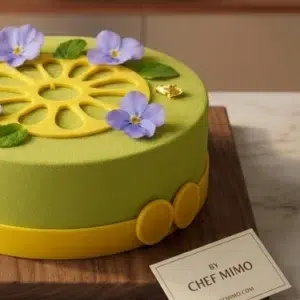
- Decorate with chocolate ring, flower, and fresh blossoms.
Notes
 The Science of Ingredients: Enzymes and Aromatics
Working with tropical fruit requires specific chemical knowledge to prevent disaster.
1. Bromelain (The Gelatin Killer)
The recipe highlights cooking the pineapple.- The Science: Fresh pineapple contains an enzyme called Bromelain, which is a protease—it digests proteins. Since gelatin is a protein, raw pineapple will "eat" the gelatin network, causing your mousse or compote to turn back into liquid. By simmering the pineapple puree and chunks (bringing them to a boil), you strictly denature (deactivate) the enzyme, making it safe to set with gelatin.
2. Timut Pepper (The False Pepper)
The compote is infused with crushed Timut pepper.- The Science: Despite its name, Timut (or Timur) berry is not a true peppercorn; it is a relative of the citrus family (Zanthoxylum), closely related to Sichuan pepper. It contains the molecule hydroxy-alpha-sanshool, which creates a mild tingling or numbing sensation on the tongue. Aromatically, it lacks the pungency of black pepper but carries intense notes of grapefruit and yuzu. It bridges the gap between the acidity of the pineapple and the sweetness of the strawberry.
3. Muscovado Sugar (Hygroscopy)
The sponge uses Muscovado rather than white sugar.- The Science: Muscovado is an unrefined cane sugar with high molasses content. Molasses is acidic and hygroscopic (water-loving). It attracts moisture from the air and holds it within the sponge structure. This ensures the thin disc of sponge remains incredibly moist and fudgy even after freezing and thawing, whereas a white sugar sponge might dry out.
4. Greek Yogurt (The Acidic Fat)
The mousse base uses 140g of Greek Yogurt.- The Science: Traditional mousses use heavy cream (35% fat). Replacing a portion with yogurt (10% fat) significantly lowers the fat content but introduces lactic acid. This acidity mirrors the tartness of the strawberries, creating a seamless flavor profile. The protein network in strained yogurt also adds body, allowing us to use less gelatin for a texture that dissolves cleanly on the palate.
Essential Professional Kitchen Tools
To achieve the defined layers and velvet finish, specific tools are required.-
Pavoni "Cosima" or "Eclipse" Mold
- Why you need it: The recipe is named after the mold shape (often rounded with soft edges). These silicone molds allow for easy unmolding of frozen mousse without breakage. Rigid metal pans cannot achieve these curves.
-
Velvet Spray Gun
- Why you need it: The "Velvet" effect relies on atomizing a mixture of cocoa butter and white chocolate. The tiny droplets freeze instantly on the cold cake, creating a flocked, fabric-like texture. A spray gun is the only way to achieve this even coverage.
-
Spice Grinder or Mortar & Pestle
- Why you need it: To release the essential oils of the Timut pepper, you must crush it just before using. Pre-ground pepper loses its volatile grapefruit notes rapidly. A fresh crush ensures the flavor permeates the compote.
-
Stick Blender (Immersion Blender)
- Why you need it: For the Namelaka. Namelaka is an emulsion of water (juice/milk) and fat (cocoa butter/cream). A whisk introduces air; a stick blender forces the molecules together into a glossy, dense cream without bubbles.
Expert Tips and Success Hacks
Master the tropical techniques with these five tips.1. The "Boil Rule" for Pineapple
Never trust "sweetened puree" to be enzyme-free unless specified.- The Hack: Even if using store-bought puree, bring it to a boil for 30 seconds before adding gelatin. It’s better to be safe than to have a melted dessert. If using fresh pineapple chunks in the compote, simmer them for at least 5 minutes to soften the fibers and kill the bromelain.
2. Muscovado Clump Control
Muscovado sugar loves to form rock-hard lumps.- The Hack: Before whipping it with the eggs, blend the Muscovado sugar with the almond flour in a food processor or rub it through a fine sieve. If you leave lumps, they will sink to the bottom of the sponge and create sticky, burnt caramel spots.
3. Namelaka Setting Time
Namelaka looks very runny when fresh.- The Hack: Do not panic. Unlike ganache, Namelaka relies on slow crystal formation. It needs at least 12 hours in the fridge to set to its correct texture. Do not try to rush it in the freezer, or the texture will become grainy.
4. Waterproofing the Coconut Crisp
The crispy base sits under a wet mousse.- The Hack: Ensure the white chocolate and almond butter mixture fully coats every shard of the crêpes dentelle and coconut. This fat barrier is the only thing stopping the sponge moisture from making the base soggy. You can even brush the top of the frozen crisp disc with a little extra melted white chocolate before assembly.
5. Temperature Contrast for Velvet
The spray only works on extreme cold.- The Hack: Your cake must be at -18°C or colder. Your spray mixture must be at 45°C. If the cake is thawing (wet surface) or the spray is too cool, the cocoa butter won't crystallize into "velvet"—it will just slide off as a greasy shell.
Frequently Asked Questions (FAQ)
Q1: Can I substitute Timut Pepper? A: Timut is unique, but you can approximate it. Use Pink Peppercorns (crushed) mixed with Grapefruit Zest. This mimics the floral heat and citrus aroma. Do not use black pepper, as it is too harsh and savory for this delicate fruit profile. Q2: Can I use canned pineapple? A: Yes! Canned pineapple is actually safer because the canning process (high heat) destroys the bromelain enzyme. You can use it directly without the intense boiling step, though simmering it with the flavorings is still recommended for taste infusion. Q3: My Namelaka separated/looks oily. Why? A: This happens if the white chocolate was too hot when adding the cold cream, or if you over-mixed it. To save it, gently reheat the mixture to 35°C and blend again with the immersion blender, keeping the blade submerged. Q4: Can I make the sponge without almond flour? A: You can substitute the almond flour with more all-purpose flour, but the sponge will be drier. Almond flour provides fat and moisture. If you have a nut allergy, consider using shredded coconut ground into a fine flour to maintain the flavor profile. Q5: How long does the Velvet Spray last? A: Once sprayed and thawed, the velvet texture is stable in the fridge for about 24 hours. After that, the cocoa butter may start to absorb moisture from the fridge air and crack or look "wet." It is best served on the day of glazing. Tried this recipe?Let us know how it was!

I’m Chef Mimo, a passionate pastry chef with over 17 years of experience in the world of fine desserts. I specialize in French-style entremets, refined cakes, and creative chocolate work. Pastry is not just my profession—it’s my lifelong passion. Through PastryCrafted.com, I love sharing my recipes, techniques, and inspirations with anyone who dreams of mastering the art of pastry. Whether you’re a curious beginner or a seasoned pro, you’re welcome in my sweet world.