
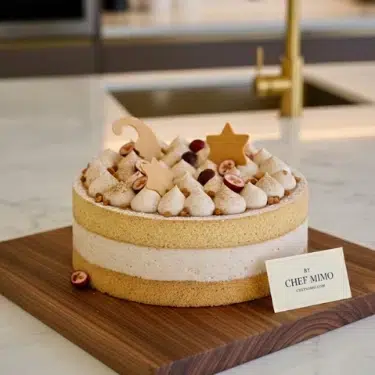

Cranberry, Apple & Cinnamon Christmas Cake
A Vienna Sponge Winter Tale: Introduction to the Christmas Cake
While the heavy, fruit-laden British Christmas cake is a classic, the Continental European approach often favors lightness and cream. This Cranberry, Apple & Cinnamon Christmas Cake draws inspiration from the Austrian/German tradition of the Wiener Boden (Vienna Sponge)—a cloud-like cake that sits halfway between a genoise and a butter cake.This dessert is a study in balance. The warmth comes from a Gingerbread Cream (Lebkuchencreme), infused with cardamom, allspice, and cinnamon, stabilized with rich mascarpone. The brightness comes from the Apple-Cranberry Compote, where the tartness of fresh cranberries cuts through the dairy fat.Why make this? It is the perfect alternative to heavy holiday puddings. It is visually stunning with its naked layers and festive colors, yet surprisingly light on the palate. It teaches the essential technique of "Infused Dairy" and the mechanics of working with Gelling Sugar, a staple in European fruit preservation that ensures your compote holds its shape inside the cake without weeping.Ingredients
🎂 For the Vienna Sponge (Wiener Boden)
- 4 Eggs separated
- 100 g Granulated Sugar
- 1 Pinch Salt
- 0.5 tsp Ground Cinnamon
- Zest of half an Orange
- 50 g Spelt Flour Type 630
- 50 g Cornstarch
- 50 g Butter melted
🍎 For the Apple-Cranberry Compote (Insert)
- 90 g Fresh Cranberries
- 40 g Gelling Sugar 2:1
- 1 sachet Vanilla Sugar
- 1 Apple Gala variety, peeled, cored, diced
- 50 g Apple Juice
- Juice of half an Orange
🤎 For the Gingerbread Cream (Lebkuchencreme)
- 300 g Heavy Cream
- 40 g Granulated Sugar
- 1 tsp Ground Cinnamon
- 0.5 tsp Ground Allspice Piment
- 0.5 tsp Ground Cardamom
- 2 Gelatin Sheets
- 1 Egg Yolk reserved from sponge preparation
- 250 g Mascarpone
✨ For Decoration (QS)
- Some Chocolate Stars
- Some fresh Cranberries
- Some Nougatine/Croquant Krokant
- A little Ground Cinnamon
Mastering Textures and Flavors📗 Download your PDF now!
Instructions
Vienna Sponge (Wiener Boden)
- Prep: Preheat oven to 180°C (350°F). Line the bottom of an 18cm springform pan with parchment paper. If using a cake ring, wrap the bottom with parchment paper.
- Meringue Base: Separate the eggs. Whisk the egg whites with the pinch of salt and 100g sugar until stiff peaks form.
- Flavoring: Slowly pour in 3 egg yolks, the 0.5 tsp ground cinnamon, and the orange zest. Reserve the last egg yolk for the Gingerbread Cream.
- Dry Mix: Sift the 50g spelt flour and 50g cornstarch together, then carefully fold them into the whipped egg mixture.
- Fats: Gently fold in the 50g melted butter (it should be liquid, but not too hot).
- Bake: Pour the Vienna mass into the 18cm mold and bake for approx. 20 minutes.
- Cooling: After baking, immediately flip the Vienna Sponge (still in the mold) onto a sheet of parchment paper. This traps steam and keeps the sponge moist. Let cool completely.
Apple-Cranberry Compote
- Cook Cranberries: Place the 90g fresh cranberries, gelling sugar, and vanilla sugar in a saucepan. Heat over medium heat until the cranberries start to pop open.
- Add Fruit: Deglaze the cranberries with the juice of half an orange. Add the apple juice and stir.
- Add the diced apple cubes (Gala). Simmer everything over medium heat for about 5 minutes, stirring occasionally, until the apples soften slightly.
- Chill: Allow the compote to cool completely in the refrigerator overnight.
Gingerbread Cream (Lebkuchencreme)
- Prep: Soak the 2 gelatin sheets in very cold water.
- Infusion: Bring the 300g heavy cream, 40g sugar, 1 tsp cinnamon, 0.5 tsp allspice, and 0.5 tsp cardamom to a boil. Remove from heat immediately.
- Custard Base: Slowly strain the hot spiced cream through a sieve into the bowl containing the reserved egg yolk, whisking constantly.
- Return the mixture to the saucepan and heat to approx. 85°C (185°F), or until the cream begins to thicken slightly (Nappe stage).
- Set: Remove from heat and stir in the squeezed gelatin until dissolved.
- Pour the cream into a container, cover the surface directly with plastic wrap (filmer au contact), and chill in the refrigerator overnight.
Assembly and Finishing
- Cut Cake: Use a serrated knife to halve the cooled Vienna Sponge, creating two even layers.
- Cream Prep: Combine the chilled Gingerbread Cream base with the 250g mascarpone. Whip until light and airy.
- Mold Prep: Line the edge of the cake ring with cake acetate (Tortenrandfolie) or plastic wrap. Place the first cake layer inside the ring.
- First Ring: Pipe a ring of the cream mixture (approx. 2cm wide) around the edge of the bottom cake layer.
- Filling: Fill the center with the cooled Apple-Cranberry Compote, spreading it smoothly.
- Second Layer: Spread the remaining cream over the compote, making it as level as possible.
- Place the second cake layer on top and gently press down.
- Decoration: Reserve about 150g of the cream mixture. Use this reserved cream, fill a piping bag fitted with a 10mm round tip, and pipe even rosettes or dots on the surface of the cake.
- Garnish: Dust the top lightly with ground cinnamon. Arrange the chocolate stars, fill gaps with halved fresh cranberries, and sprinkle with nougatine/croquant.
- Set: Keep the cake chilled until serving. Consume within 3 days.
Notes
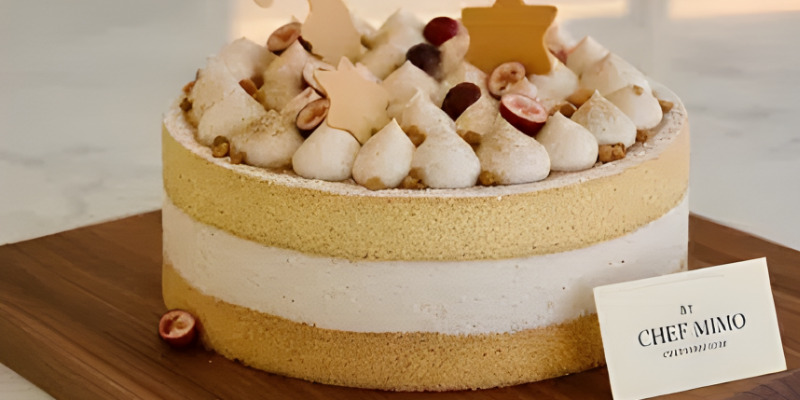 To achieve a stable layer cake with soft fillings, we rely on specific ingredient properties.
1. Vienna Sponge (The Fat-Enriched Foam)
The base is a Wiener Boden.- The Science: A standard sponge relies solely on egg foam for structure. A Vienna Sponge adds melted butter at the very end. This fat coats the flour proteins, inhibiting gluten formation even further than a standard sponge. The result is a crumb that is moister and more flavorful than a Genoise, but still airy enough to absorb the moisture from the compote without turning into mush.
2. Spelt Flour (Type 630)
The recipe specifies Spelt Flour (Dinkelmehl).- The Science: Spelt is an ancient grain with a more water-soluble protein structure than modern wheat. In a sponge cake, this results in a delicate, nutty crumb that is less rubbery. It adds a subtle earthy flavor that pairs exceptionally well with winter spices like cinnamon and cardamom.
3. Gelling Sugar 2:1 (Pectin Activation)
The compote uses "Gelling Sugar" (Gelierzucker).- The Science: This is sugar pre-mixed with Pectin and Citric Acid. The "2:1" ratio means it is designed to set 2 parts fruit with 1 part sugar. Commercial pectin requires high acidity and sugar to form a gel network. By using this specialized sugar, you ensure the compote sets into a "cuttable" texture quickly (5 minutes simmer) without needing to boil it for hours, which would destroy the fresh apple texture.
4. Mascarpone (Fat Stabilization)
The cream layer uses 250g of Mascarpone.- The Science: Mascarpone has a fat content of 40-45%, much higher than heavy cream. When whipped, these fat globules agglomerate to form a rigid structure. This allows us to create a thick, pipeable cream using very little gelatin (only 2 sheets), resulting in a texture that melts in the mouth rather than feeling rubbery or "jelly-like."
Essential Professional Kitchen Tools
Layer cakes require precision to look neat.-
Cake Acetate (Tortenrandfolie)
- Why you need it: When layering cream and compote inside a ring, you need a non-stick barrier. Acetate ensures that when you remove the metal ring, the sides of the cake are perfectly smooth and the cream layers are visible and sharp.
-
Springform Pan (18cm)
- Why you need it: This recipe is calculated for the specific height-to-width ratio of an 18cm tin. Using a 24cm tin would result in very thin, pancake-like layers that dry out in the oven.
-
Fine Mesh Sieve
- Why you need it: For the Gingerbread Cream. You must boil the spices in the cream to extract the essential oils, but leaving ground spices (especially gritty cardamom or allspice) in the final cream ruins the silky texture. Straining is non-negotiable.
-
Immersion Blender or Hand Mixer
- Why you need it: To whip the Mascarpone and custard base. Mascarpone can curdle if over-beaten, but hand-whisking often leaves lumps. A mixer on medium speed gives you the control to stop at the "Soft Peak" stage.
Expert Tips and Success Hacks
Achieve the perfect "Naked Cake" look with these secrets.1. The "Flip" Technique
How do you get a perfectly flat sponge top?- The Hack: Immediately after baking, remove the sponge from the oven and flip the mold upside down onto a sheet of parchment paper (while the cake is still inside). Leave it there to cool. The weight of the mold flattens the dome, and the trapped steam keeps the sponge incredibly moist.
2. The "Compote Dam"
Fluid compote can leak out the sides.- The Hack: As per the instructions, pipe a 2cm ring of the Gingerbread Cream around the outer edge of the sponge layer before adding the apple compote. This acts as a structural dam, holding the fruit inside. If the fruit touches the acetate, it might bleed color into the white cream.
3. Spice Infusion Heat
Cold cream doesn't absorb spice well.- The Hack: You must bring the cream and spices to a boil. The heat releases the volatile oils in the cinnamon and cardamom. However, once boiled, remove from heat immediately. Boiling milk proteins for too long can create a "skin" or burnt taste.
4. Mascarpone Temperature
- The Hack: While the custard base (spiced cream + yolk + gelatin) needs to be chilled overnight, the Mascarpone should also be cold when you mix them. If you mix warm custard with cold mascarpone, the gelatin will set in lumps. If you mix cold custard with room-temp mascarpone, the fat may separate. Keep everything cold!
5. Cranberry "Pop"
- The Hack: Don't rush the cranberry cooking. Listen for the popping sound. This indicates the skins have burst, releasing the fruit's natural pectin. This natural pectin works in tandem with the gelling sugar to ensure a firm set.
Frequently Asked Questions (FAQ)
Q1: I can't find Gelling Sugar. What can I use? A: Mix 40g of regular sugar with 2g of Pectin NH (or 1 tsp of powdered fruit pectin). Whisk them together dry, then add to the fruit. You may need to add a squeeze of lemon juice to help it set if using regular pectin. Q2: Can I use All-Purpose Flour instead of Spelt? A: Yes. Use standard pastry flour (Type 405 or 550). The texture will be slightly less nutty, but the rise and structure will be identical. Spelt is a flavor choice, not a structural necessity here. Q3: Can I freeze this cake? A: Yes. The Vienna sponge and the mousse freeze beautifully. The compote also freezes well thanks to the sugar. Thaw it slowly in the fridge overnight. Decorate with fresh cranberries after thawing, as frozen berries will weep water. Q4: My Gingerbread Cream is grainy. Why? A: This is usually because the Mascarpone was over-whipped. Mascarpone has a high fat content and turns into butter very quickly. Stop whipping as soon as the mixture holds its shape. Do not try to make it "stiff" like meringue. Q5: Why add cornstarch to the sponge? A: Cornstarch has no gluten. By replacing 50% of the flour with starch, you effectively cut the gluten content in half. This ensures a "short," tender crumb that dissolves in the mouth, characteristic of the Wiener Boden style. Tried this recipe?Let us know how it was!

I’m Chef Mimo, a passionate pastry chef with over 17 years of experience in the world of fine desserts. I specialize in French-style entremets, refined cakes, and creative chocolate work. Pastry is not just my profession—it’s my lifelong passion. Through PastryCrafted.com, I love sharing my recipes, techniques, and inspirations with anyone who dreams of mastering the art of pastry. Whether you’re a curious beginner or a seasoned pro, you’re welcome in my sweet world.