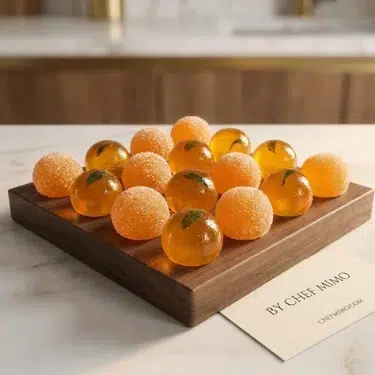
Melon Ginger Fruit Paste (Pâte de Fruit Melon Gingembre)
A Sophisticated Pairing: Introduction to Melon Ginger Pâte de Fruit
In the vast world of French confectionery, Pâte de Fruit (Fruit Paste) is often misunderstood as simple "fruit jelly." However, when executed at a haute-pâtisserie level, it becomes a complex study in fruit preservation and texture. This specific recipe—Melon Ginger—moves beyond the standard raspberry or apricot flavors to offer a refined, gourmet experience. It pairs the floral, honeyed sweetness of ripe melon with the sharp, enzymatic heat of fresh ginger.What sets this recipe apart is the Finish. Most fruit pastes are simply rolled in sugar. This recipe utilizes a Gum Arabic Lacquer—a technique traditionally reserved for Marrons Glacés or high-end chocolates. This lacquer creates a microscopic barrier that locks in moisture, adds a jewel-like shine, and prevents the sugar coating from "weeping" (melting) in humid environments.Why make this? It is the ultimate "Petit Four." The texture is short and melting, not rubbery. The flavor evolves on the palate: first the sweet melon, then the sugar crunch, and finally the warming kick of ginger. It is a lesson in precision, teaching you to master the "Brix" of sugar cookery.Ingredients
🍋 For the Acid Solution (Solution Acide)
- 8 g Citric Acid
- 8 g Water
🍈 For the Melon Fruit Paste (Pâte de Fruit)
- 400 g Melon Purée
- 80 g Granulated Sugar 1
- 10 g Yellow Pectin
- 400 g Granulated Sugar 2
- 140 g Glucose Syrup DE38
- 8 g Acid Solution prepared above
- 100 g Fresh Ginger to extract juice
✨ For the Lacquering Solution (Laquage)
- 134 g Water
- 42 g Gum Arabic Gomme Arabique
- 125 g 70% Alcohol e.g., food-grade grain alcohol
🧂 For the Finishing
- 200 g Granulated Sugar for coating
Mastering Textures and Flavors📗 Download your PDF now!
Instructions
Prepare the Acid Solution
- Bring the 8g of water to a simmer.
- Add the 8g citric acid and stir until completely dissolved.
- Transfer to an airtight container and reserve.
Prepare the Melon Ginger Purée
- Pass the 100g fresh ginger through a juicer (centrifuge) to extract the juice.
- Measure out 40g of the fresh ginger juice.
Cook the Fruit Paste
- Heat the 400g melon purée with the 40g fresh ginger juice to 40°C (104°F).
- In a separate bowl, mix the 80g Granulated Sugar (1) with the 10g yellow pectin.
- Pour the pectin/sugar mixture into the melon purée while whisking constantly. Bring to a boil.
- Gradually pour in the 400g Granulated Sugar (2), then the 140g glucose syrup, maintaining the boil throughout.
- Continue cooking, stirring with a whisk, until the mixture reaches 74° Brix (105°C / 221°F).
- Remove from heat, add the 8g of Acid Solution, and mix well.
Setting and Crystallization
- Immediately pour the fruit paste into a 20cm x 20cm frame (or into silicone sphere molds).
- Allow the paste to crystallize for 24 hours at room temperature.
Prepare the Lacquering Solution
- Heat the 134g water with the 42g gum arabic until the gum is fully dissolved.
- Strain the solution (chinois) and add the 125g of 70% alcohol. Reserve in an airtight container.
Finishing and Lacquering
- After 24 hours, demold or cut the fruit paste into desired shapes (cubes or spheres).
- Coat the pieces in the 200g granulated sugar.
- Place the sugar-coated fruit pastes on a wire rack.
- Apply the gum arabic lacquer to the pieces. Repeat the lacquering process a minimum of two times, allowing the pieces to dry in a controlled environment (étuve or warm, dry area) for 2 hours after each layer.
- Enjoy your Melon Ginger Fruit Paste!
Notes
The Science of Ingredients: The Chemistry of Pectin and Shine
Pâte de Fruit is a chemical equation. If one variable is off, the gel will not set.1. Yellow Pectin (HM Pectin)
The recipe specifies "Yellow Pectin" (Pectine Jaune).- The Science: This is a High Methoxyl (HM) pectin derived from citrus peels. Unlike Pectin NH (used in glazes), Yellow Pectin is non-thermoreversible—once it sets, you cannot melt it down and reset it. It requires two triggers to gel: High Sugar Concentration (>60%) and Acidity (pH < 3.5). This is why we add the acid solution at the very end. If added too early, the pectin sets in the pot (pre-gelling), creating a broken, lumpy texture.
2. Citric Acid Solution (The Catalyst)
You must prepare a 50/50 solution of water and citric acid.- The Science: Melon is a low-acid fruit (unlike raspberry or passion fruit). It does not have enough natural acidity to trigger the pectin. The added citric acid lowers the pH of the mixture, allowing the pectin chains to bond together into a firm gel. Adding it at the exact moment you stop cooking ensures a uniform set.
3. 74° Brix (The Set Point)
The instructions mention cooking to 105°C or 74° Brix.- The Science: Temperature (105°C) is a good indicator, but Brix is the truth. Brix measures the percentage of dissolved solids (sugar) in the water. At 74° Brix, there is exactly enough water evaporated to create a stable shelf-life and the perfect texture. If you stop at 70° Brix, the paste will be too soft and may mold. If you go to 80° Brix, it will be hard candy.
4. Gum Arabic (The Lacquer)
The finishing solution uses Gum Arabic and alcohol.- The Science: Gum Arabic is a hardened sap from the Acacia tree. It is edible and water-soluble. When dissolved and mixed with alcohol (which speeds up evaporation), it forms a thin, transparent, and tasteless film over the sugar-coated candy. This film is hydrophobic, meaning it prevents humidity from the air from dissolving the sugar coating, keeping the exterior crisp and dry for weeks.
Essential Professional Kitchen Tools
To achieve the perfect texture, you need tools that measure sugar density and heat.-
Refractometer (0-90 Brix Range)
- Why you need it: While a thermometer is helpful, a refractometer is precise. It uses light refraction to tell you exactly how much sugar is in your solution. For Pâte de Fruit, a reading of 74-75° Brix is the gold standard for success.
-
Stainless Steel Confectionery Frame
- Why you need it: You need a 20x20cm frame placed on a silicone mat. Pâte de Fruit sets very quickly once the acid is added. You cannot shape it by hand. A frame ensures perfectly square corners and uniform thickness for professional cutting.
-
Centrifugal Juicer
- Why you need it: Ginger fiber is fibrous and unpleasant in a smooth paste. A juicer extracts the pure, potent "ginger water" without the pulp. This allows the flavor to infuse the melon puree seamlessly.
-
Chinois (Fine Mesh Strainer)
- Why you need it: For the Lacquering Solution. Gum Arabic often contains small impurities or undissolved clumps. Straining the solution ensures the final coat is perfectly clear and shiny, not gritty.
Expert Tips and Success Hacks
From the cooking pot to the drying rack, here is how to avoid common pitfalls.1. The Pectin Dispersion Rule
Pectin clumps instantly if it touches hot liquid.- The Hack: Always, always mix your pectin thoroughly with the small portion of sugar (Sugar 1) before adding it to the puree. This separates the pectin grains. When adding it to the 40°C puree, whisk vigorously. This is called "dispersing." If you see white lumps, start over—they will never dissolve.
2. The Cooking Rhythm
Don't rush the boil.- The Hack: You are evaporating water. If you blast the heat to high, you might hit 105°C before enough water has evaporated, resulting in a paste that is technically hot enough but structurally weak. Cook over medium heat, stirring constantly, to allow evaporation to keep pace with the temperature rise.
3. The "Acid Drop" Speed
Timing is everything.- The Hack: Have your acid solution measured and ready in a small cup next to the stove. The moment you hit 105°C/74 Brix, turn off the heat, dump the acid in, whisk for 5 seconds to distribute, and pour immediately. You have about 30 seconds before it starts to gel. Do not scrape the bottom of the pot too much, as pre-gelled bits might be stuck there.
4. Lacquering Patience
The lacquer needs to dry.- The Hack: After rolling the cut squares in sugar, let them sit for 20 minutes. Then apply the first coat of lacquer (using a brush or dipping). You must let them dry for 2 hours in a warm, dry place (an oven with just the light on is great) before applying the second coat. If you rush, the lacquer will stay sticky.
5. Cleaning the Pot
Pectin residue is stubborn.- The Hack: Immediately after pouring the paste, fill your pot with hot water and let it soak. Pectin sets like concrete as it cools. If you let it dry, you will have to scrub for ages. Hot water dissolves the sugar bond instantly.
Frequently Asked Questions (FAQ)
Q1: Can I use powdered ginger instead of fresh? A: Technically yes, but the flavor profile will change. Fresh ginger juice provides a bright, citrusy "zing" that pairs perfectly with melon. Powdered ginger is warmer and earthier (like gingerbread). If using powder, use only 2-3g, as it is very concentrated. Q2: Can I use Apple Pectin (NH) instead of Yellow Pectin? A: No. Pectin NH is for glazes and low-sugar fillings. It produces a softer, spreadable gel. Yellow Pectin produces the firm, "fracturable" bite required for traditional Pâte de Fruit. They are not interchangeable here. Q3: Why is my fruit paste "weeping" water after a few days? A: This is usually due to undercooking (didn't reach 74° Brix) or not enough acidity. If the sugar concentration is too low, the water is not fully bound and leaks out. Alternatively, storing it in a humid fridge without a lacquer seal can cause the sugar to melt. Store in a cool, dry place, not the fridge. Q4: Can I skip the Gum Arabic Lacquer? A: Yes. You can simply roll them in granulated sugar and eat them. They will be delicious! However, they will have a shorter shelf life (about 1 week vs. 1 month) and the sugar coating may look wet if the weather is humid. The lacquer is for a professional finish. Q5: What is "Glucose DE38"? A: DE stands for "Dextrose Equivalent." It measures how much the starch has been broken down into simple sugars. DE38 is a standard glucose syrup found in baking supply stores (often just labeled "Glucose Syrup"). It provides moderate sweetness and high viscosity. If you use High Fructose Corn Syrup, the texture will be too soft.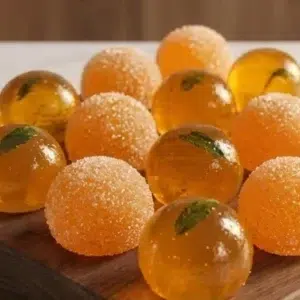
Tried this recipe?Let us know how it was!

I’m Chef Mimo, a passionate pastry chef with over 17 years of experience in the world of fine desserts. I specialize in French-style entremets, refined cakes, and creative chocolate work. Pastry is not just my profession—it’s my lifelong passion. Through PastryCrafted.com, I love sharing my recipes, techniques, and inspirations with anyone who dreams of mastering the art of pastry. Whether you’re a curious beginner or a seasoned pro, you’re welcome in my sweet world.