
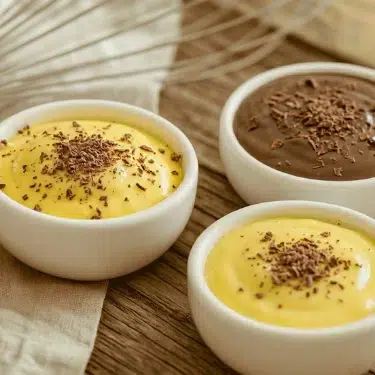
Pastry Cream: A Masterclass in the "Mother of All Creams"
The Backbone of French Pastry: Introduction to Crème Pâtissière
If there is one recipe a pastry chef must master before all others, it is Pastry Cream (Crème Pâtissière). It is the culinary "Mother Sauce" of the dessert world. On its own, it fills éclairs, tarts, and choux puffs. But its true power lies in its versatility as a base for other legendary creams:Crème Diplomate: Pastry Cream + Whipped Cream (lighter, used in Mille-feuille).Crème Mousseline: Pastry Cream + Soft Butter (richer, used in Fraisier).Crème Chiboust: Pastry Cream + Italian Meringue (airy, used in Saint-Honoré).Frangipane: Pastry Cream + Almond Cream (baked, used in Galette des Rois).This specific recipe uses Cornstarch (or "Cream Powder") rather than flour. While older traditional recipes used flour, modern professional pastry relies on cornstarch for a cleaner flavor release, a glossier shine, and a texture that is silky rather than pasty. Mastering this cream is about controlling heat: cooking it long enough to thicken, but carefully enough to keep the eggs smooth.Ingredients
- 250 g milk
- 2 to 3 egg yolks ideally 50 g
- 50 g sugar
- 20 g cornstarch or cream powder
Mastering Textures and Flavors📗 Download your PDF now!
Instructions
- Bring the milk to the boil.
- Meanwhile, whisk together the egg yolks, sugar and cornstarch until smooth and lump-free.
- Pour a little of the milk over the mixture to loosen it. Stir and add the rest of the milk.
- Pour the mixture back into the pan and bring to the boil.
- Keep the heat on medium to avoid burning the bottom of the pan. Don't stop stirring for the same reason.
- Once your cream starts to boil slightly, continue cooking for a minute or so. This ensures even cooking of the starch.
- Immediately pour your crème pâtissière into a gratin dish or large bowl. Cover with cling film to prevent it from drying out and forming a crust.
- I leave the cream to cool for around ten minutes at room temperature, then keep it in the fridge. A crème pâtissière can generally be kept for 2 to 3 days in the refrigerator.
- Flavoring your pastry cream:
- Although I specify that you should mix the ingredients while your cream is still warm, you can do it cold if you've forgotten. Simply loosen your pastry or melted chocolate with a little of your pastry cream before adding the rest and mixing well with a whisk.
- Quantities are made for a pastry cream weight of around 350 g (which is what you get with the recipe I gave).
- With vanilla:
- Simply use half a vanilla pod. Split the pod in half and scrape it out, then add it to the milk. You can leave the pod to infuse throughout the cooking process, and even afterwards. I always remove the pod before using the cream, as this allows it to infuse longer and release more flavour.
- Chocolate:
- Use around 100 g of dark chocolate, to be adapted according to your preferred chocolate taste.
- Once your cream is cooked and still hot, pour it over the chopped chocolate and whisk to combine. Pour into a gratin dish, covered with cling film as for the basic recipe.
- With pistachio and praline :
- Once cooked, add 35 g of pistachio or praline paste. Mix, pour into your dish and cover with cling film.
- Citrus fruit:
- Simply add the zest of the citrus fruit of your choice to the sugar, egg and starch mixture.
- With flavored alcohol (e.g. Grand Marnier):
- Add 30 g of alcohol to your cooled crème pâtissière, then whisk to combine.
- Tips and advice to remember:
- Avoid mixing pastry cream as much as possible. This will destroy the coagulation of the egg yolks, and your cream will no longer hold together!
- If you don't have cling film, you can rub a little butter on the surface of your cream (a technique used before cling film existed).
- Translated with DeepL.com (free version)
Notes
The Science of Ingredients: Chemistry of Custard
Why does this mixture of milk and eggs need to boil, unlike a standard Crème Anglaise?1. Cornstarch (The Gelatinization Engine)
The recipe calls for 20g of cornstarch or cream powder.- The Science: Starch granules need high heat (usually near boiling, 100°C) to absorb water, swell, and burst, releasing amylose molecules that form a thick gel network. If you do not bring the cream to a boil, the starch granules remain intact, and the cream will taste chalky and be too thin.
- Cream Powder vs. Cornstarch: "Cream Powder" (poudre à crème) sold in professional supplies is simply high-quality cornstarch with added natural vanilla flavor and yellow coloring (beta-carotene). They are chemically interchangeable.
2. The "Amylase" Factor (Why You Boil for 1 Minute)
The instructions emphasize cooking for "a minute or so" after boiling.- The Science: Egg yolks contain an enzyme called alpha-amylase. This enzyme digests starch, turning thick cream back into liquid soup. Heat destroys this enzyme, but it is heat-resistant. Simply reaching a boil isn't enough; you must hold the boil for at least 60 seconds to fully denature (kill) the amylase. If your pastry cream turns runny after a day in the fridge, you didn't boil it long enough.
3. Sugar (The Protein Protector)
Sugar does more than sweeten.- The Science: Sugar raises the coagulation temperature of the egg proteins. In a scrambled egg, proteins bond tightly at 70°C. In pastry cream, the high sugar concentration coats the proteins, allowing them to withstand the 100°C boiling temperature without curdling into lumps. This allows us to activate the starch without ruining the eggs.
4. Milk (The Flavor Carrier)
The recipe uses 250g of milk.- The Science: Fat carries flavor. Whole milk (3.5% fat) is preferred over skim milk because the dairy fat coats the tongue and lingers, extending the taste of the vanilla bean. If using low-fat milk, the cream will feel watery and the flavor will dissipate quickly.
Essential Professional Kitchen Tools
To ensure a lump-free, silky cream, these tools are essential.-
Whisk (Fouet)
- Why you need it: Essential for the initial mixing of sugar and yolks (blanching) and for constant agitation during boiling. However, ensure your whisk reaches the corners of the saucepan, or the cream will burn there.
-
Heavy-Bottomed Saucepan
- Why you need it: Milk scorches easily. A thin pot creates hot spots where the proteins stick and burn before the rest of the cream thickens. A heavy stainless steel pot distributes heat evenly, giving you control.
-
Plastic Wrap (Cling Film)
- Why you need it: For "Contact Wrapping." As pastry cream cools, moisture evaporates from the surface, leaving behind a rubbery, unpleasant layer called "skin." Placing plastic wrap directly onto the surface of the hot cream seals it, preventing evaporation and skin formation.
-
Shallow Gratin Dish / Tray
- Why you need it: Pouring the hot cream into a wide, shallow tray cools it down much faster than leaving it in a deep bowl. Rapid cooling is crucial for food safety (bacteria love warm dairy) and for preserving the texture.
Expert Tips and Success Hacks
Achieve the perfect consistency with these professional secrets.1. The "Tempering" Technique
Don't shock the cold eggs with boiling milk.- The Hack: Pour only about 1/3 of the boiling milk into the egg/starch mixture while whisking vigorously. This warms up the eggs gradually ("tempers" them). Then, pour that warm egg mixture back into the remaining hot milk. If you dump cold eggs directly into the boiling pot, they will scramble instantly on contact.
2. Lissing (Smoothing) Without Overworking
The recipe notes: "Avoid mixing pastry cream as much as possible [after cooling]."- The Hack: When you take the cold block of cream out of the fridge, it will be a stiff gel. You must whisk it ("lisser") to make it creamy again before using. However, do this gently and only until smooth. If you put it in a stand mixer on high speed for 5 minutes, the shear force will break the starch gel network, and the cream will turn into a runny liquid that cannot be saved.
3. Flavor Infusion Timing
When to add flavor matters.-
The Hack:
- Fat-soluble (Vanilla, Citrus Zest): Add to the milk before boiling. Heat extracts the oils.
- Alcohol (Grand Marnier, Rum): Add after the cream has cooled completely. Adding alcohol to hot cream evaporates the flavor and alcohol content.
- Pastes (Praline, Pistachio, Chocolate): Add while the cream is hot (off the heat). The heat helps melt the cocoa butter or nut oils for a seamless emulsion.
4. The "Shine" Check
How do you know it's cooked?- The Hack: As the cream approaches the boil, it will look matte and thick. As you continue to whisk during that critical 1-minute boil, you will see the texture change from "pasty" to "fluid and glossy." That shine is the signal that the starch has fully gelatinized.
5. Emergency Rescue for Lumps
Even chefs make mistakes.- The Hack: If you accidentally scrambled some egg or burned the bottom (creating black specks), do not panic. Immediately force the hot cream through a fine-mesh sieve (chinois). The lumps will stay in the sieve, and the smooth cream will pass through. Do this before it cools.
Frequently Asked Questions (FAQ)
Q1: My pastry cream turned runny after a day. Why? A: This is the "Amylase Failure." You likely took the cream off the heat the moment it thickened, rather than letting it boil for a full minute. The surviving enzymes ate the starch structure in the fridge. Next time, boil it longer! Q2: Can I freeze pastry cream? A: No. As it thaws, the water separates from the starch sponge (syneresis), resulting in a curdled, wet, and grainy texture. However, creams with high fat added (like Mousseline) freeze slightly better, though fresh is always best. Q3: Can I use flour instead of cornstarch? A: Yes, but double the quantity (40g flour vs 20g starch) as flour has less thickening power. Also, you must cook it longer to cook out the "raw flour" taste. The result will be more opaque and heavier, suitable for rustic tarts but less refined for éclairs. Q4: How do I make Chocolate Pastry Cream richer? A: The standard recipe adds chocolate at the end. For a deeper flavor, you can also substitute 10g of the cornstarch with 10g of cocoa powder in the initial mix. This adds color and intense cocoa notes. Q5: Why is my cream grainy? A: Graininess usually comes from overcooked egg proteins (scrambling). This happens if you stop whisking while the pot is on the heat. You must keep the liquid moving constantly, especially scraping the corners of the pot, so no part of the egg mixture sits still against the hot metal.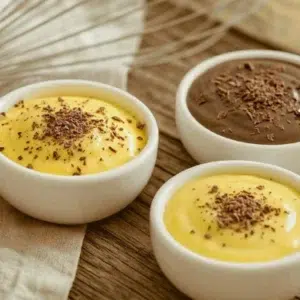
Tried this recipe?Let us know how it was!

I’m Chef Mimo, a passionate pastry chef with over 17 years of experience in the world of fine desserts. I specialize in French-style entremets, refined cakes, and creative chocolate work. Pastry is not just my profession—it’s my lifelong passion. Through PastryCrafted.com, I love sharing my recipes, techniques, and inspirations with anyone who dreams of mastering the art of pastry. Whether you’re a curious beginner or a seasoned pro, you’re welcome in my sweet world.