
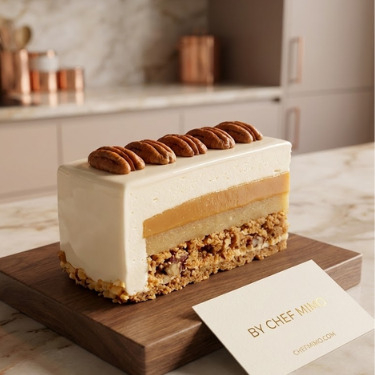
Pear, Caramel & Pecan Entremet – A Luxurious French Dessert with Creamy Layers
A Symphony of Warmth: Introduction to the Pear & Caramel Entremet
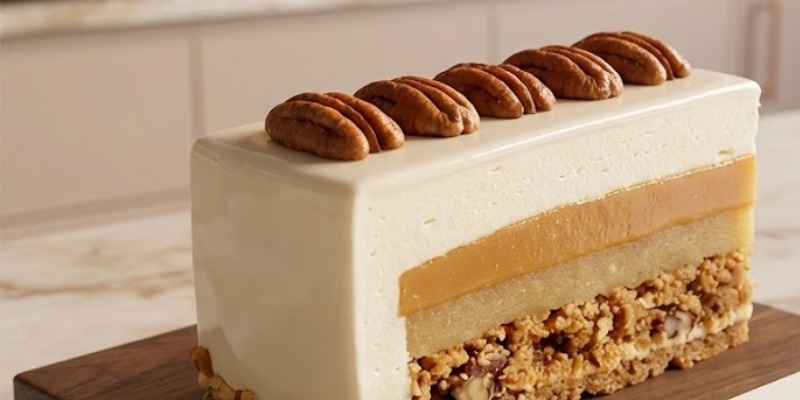
As the seasons turn, pastry chefs shift from the bright acidity of summer berries to the comforting, warm notes of autumn. This Pear, Caramel & Pecan Entremet is the embodiment of that transition. It pairs the delicate, floral sweetness of Williams Pear with the roasted richness of Pecans and the salty-sweet depth of Caramel.This is not a simple cake; it is a textural journey. It begins with a dense, moist Pecan Pain de Gênes (sponge), topped with a crunchy Praline Layer. The core is a refreshing Gelled Pear Insert, surrounded by a silky Caramel Crémeux. The entire structure is encased in a cloud of Whipped Zephyr Caramel Ganache and finished with a mirror glaze.Why make this? It introduces you to Zephyr Caramel, a professional "Blond Chocolate" that revolutionizes caramel desserts. It also teaches the technique of making Homemade Nut Paste for sponges and the art of the Caramel Anglaise—a custard base that carries deep toffee notes without bitterness.Ingredients
Zephyr Caramel Whipped Ganache (Prepare 1 day ahead)
- 90 g Zephyr Caramel chocolate
- 400 g heavy cream crème fleurette
- 1½ vanilla beans
- 1½ gelatin sheets
Pecan Genoise (Pain de Gênes)
- 55 g pecan paste see below for homemade version
- 22 g sugar
- 1 whole egg
- 15 g T45 flour
- 1 g baking powder
- 15 g butter
- 2 g milk
Whole pecans (for topping)
Homemade Pecan Paste:
- 25 g pecan powder
- 25 g icing sugar
- 5 g egg white
Gelled Pear Purée
- 250 g pear purée
- 10 g sugar
- 4 g gelatin
Caramel Crémeux
- 100 g sugar
- 30 g water
- 15 g glucose
- 65 g heavy cream
- 130 g heavy cream
- 50 g egg yolks
- ½ vanilla bean
- 1¼ gelatin sheets
Pecan Praline Paste
- 60 g pecans
- 37.5 g sugar
- 10.5 g water
Pecan Praline Crunch
- 40 g Zephyr Caramel chocolate
- 45 g crushed gavottes crêpes dentelles
- 52 g pecan praline paste
Caramel Glaze
- 70 g water
- 110 g sugar
- 23 g glucose syrup
- 70 g heavy cream
- 100 g Zephyr Caramel chocolate
- 6 g powdered gelatin
- 36 g cold water for blooming gelatin
Mastering Textures and Flavors📗 Download your PDF now!
Instructions
Zephyr Caramel Ganache (Day Before)
- Bloom gelatin in cold water.
- Heat cream and vanilla in a saucepan. Let infuse, then reheat and pour in 3 additions over chopped Zephyr chocolate.
- Add gelatin and emulsify with an immersion blender.
- Cover with cling film (touching surface) and refrigerate overnight.
Pecan Genoise
- Preheat oven to 170°C (340°F).
- Melt butter with milk and set aside.
- Blend pecan paste and egg until smooth. Whip with sugar until ribbon stage.
- Add butter/milk, then sifted flour and baking powder.
- Pour into a 20 cm mold, top with pecans, and bake for 12 minutes.
- Cool, then cut out an 18 cm round. Reserve.
Gelled Pear Insert
- Bloom gelatin. Heat pear purée with sugar.
- Remove from heat, add gelatin, and pour into an 18 cm ring lined with rhodoid and cling film underneath.
- Freeze for at least 3 hours.
Caramel Crémeux
- Bloom gelatin. Cook sugar, glucose, and water until caramelized.
- Gradually add 65 g of hot cream, stirring continuously.
- In a bowl, whisk yolks with 130 g cream. Add caramel and return to heat to make a crème anglaise (heat to 82°C).
- Remove from heat, add gelatin, blend smooth.
- Pour over frozen pear insert. Add pecan genoise on top. Freeze.
Pecan Praline Paste
- Roast pecans at 160°C (320°F) for 15 minutes.
- Cook sugar and water to 121°C (250°F), then add pecans and stir to coat.
- Continue cooking until caramelized, spread on baking paper to cool.
- Blend until smooth and slightly runny. Store in airtight container.
Pecan Praline Crunch
- Melt Zephyr Caramel chocolate. Mix in pecan praline and crushed crêpes dentelles.
- Spread into an 18 cm ring and freeze for 1 hour.
Assembly
- Whip the chilled ganache until light and creamy.
- Line a 20 cm, 6 cm high pastry ring with rhodoid and cling film at the base (flip onto silpat-lined tray).
- Pipe a layer of ganache, insert the frozen pear/caramel/genoise layer (caramel side down).
- Pipe remaining ganache and finish with the crunchy base.
- Freeze overnight.
Caramel Glaze
- Bloom gelatin in 36 g cold water.
- Heat water, sugar, and glucose to 103°C (217°F).
- Separately heat cream, then pour both over chocolate.
- Add gelatin and emulsify. Use at 35–38°C.
Final Glazing and Decoration
- Unmold frozen entremet and place on a glazing rack.
- Pour warm glaze over center and let it flow evenly.
- Decorate with pecans or gold leaf.
- Let thaw in the fridge for several hours before serving.
Notes
 The Science of Ingredients: Chemistry of Blond Chocolate and Nuts
To achieve these sophisticated flavors, we rely on specific ingredients.
1. Zephyr Caramel (The Flavor Anchor)
The recipe uses Cacao Barry Zephyr Caramel (or Valrhona Dulcey).- The Science: This is not white chocolate with artificial flavoring. It is white chocolate where the milk solids have been caramelized (Maillard reaction) during the manufacturing process. This gives it a natural biscuit/toffee flavor and a golden color. Because it is a real couverture (high cocoa butter), it provides the structural stability needed for the whipped ganache to hold its shape without feeling heavy or greasy.
2. Pain de Gênes (The Nut Sponge)
The sponge is made with "Pecan Paste," not just flour.- The Science: A standard sponge uses flour and sugar. A Pain de Gênes (Genoa Bread) relies on nut paste (nuts + sugar + egg whites) as the primary base. This high fat content (from the nuts) and sugar density creates a sponge that is incredibly moist and "fudgy." It doesn't stale in the freezer and remains soft even when chilled, providing a luxurious mouthfeel that matches the mousse.
3. Glucose in Caramel (Crystallization Inhibitor)
The Crémeux caramel uses glucose syrup.- The Science: When you boil sugar and water to make caramel, the sucrose molecules desperately want to recrystallize into a grainy solid. Glucose syrup acts as an "interfering agent." Its long molecular chains get between the sucrose molecules, preventing them from bonding. This ensures your caramel remains a smooth liquid syrup, essential when you are about to mix it with cream and eggs.
4. Gelatin in Fruit (The Pure Taste)
The Pear Insert uses gelatin, not pectin.- The Science: Pears have a very delicate flavor profile that is easily destroyed by long cooking. Pectin requires boiling to activate. By using Gelatin, we can warm only a small fraction of the puree to dissolve the gelatin and mix it back into the cold puree. This preserves the "raw," fresh taste of the pear, which provides a necessary burst of freshness to cut through the rich caramel.
Essential Professional Kitchen Tools
To build this multi-layered cake, you need specific geometry.-
Two Ring Sizes (18cm and 20cm)
- Why you need it: The secret to the "clean cut" is the Insert Gap. You build the core (Sponge + Crunch + Crémeux + Pear) in the 18cm ring. You freeze it. Then, you place this frozen core into the 20cm ring and fill the 1cm gap with the Zephyr Ganache. This ensures the caramel center is perfectly hidden.
-
Immersion Blender (Stick Blender)
- Why you need it: For the Ganache and Glaze. Zephyr Caramel chocolate can be tricky to emulsify. A stick blender forces the fat and water phases together into a glossy, stable emulsion. Hand-whisking often leads to a grainy ganache or a glaze full of bubbles.
-
Acetate Roll (Rhodoïd)
- Why you need it: The final cake is 6cm high. You need to line your 20cm ring with a strip of acetate to get a smooth release. Without it, you'll need a blowtorch to unmold, which will melt your beautiful whipped ganache.
Expert Tips and Success Hacks
Achieve the boutique look with these professional secrets.1. Homemade Pecan Paste Hack
You can't usually buy pecan paste.- The Hack: As detailed in the recipe, blend Pecan Powder + Icing Sugar + Egg White. This mimics the texture of commercial almond paste (marzipan). It is crucial to blend this until smooth before whipping it with the whole egg. If you just dump dry nut powder into the eggs, you won't get the same volume or "ribbon stage" aeration.
2. The "Caramel Anglaise" Temper
Making custard with hot caramel is dangerous.- The Hack: When you pour the hot caramel cream into the egg yolks, pour slowly and whisk constantly. If you dump it all at once, the 100°C+ caramel will scramble the yolks instantly. Once combined, cook it gently to 82°C. Do not boil! If it boils, the eggs curdle, and your smooth crémeux becomes sweet scrambled eggs.
3. Roasting is Non-Negotiable
- The Hack: For the Praline Paste, you must roast the pecans first (160°C for 15 mins). Raw pecans taste waxy and bland. Roasting releases the essential oils. The difference in flavor intensity between raw and roasted praline is massive.
4. Glazing Temperature
Zephyr Caramel glaze sets differently than dark chocolate.-
The Hack: Pour this glaze between 35°C and 38°C.
- >40°C: It will melt the whipped ganache.
- <32°C: It will be too thick and gelatinous.
- Test: The glaze should coat the back of a spoon and hold a clean line when you run your finger through it.
5. The "Upside Down" Assembly (Alternative)
- The Hack: While the recipe suggests building bottom-up in a ring, you can also use a silicone mold (like Silikomart Tortaflex or Eclipse). In this case, build Upside Down: Pipe ganache -> Insert frozen core (pear side down) -> Sponge -> Crunch. Freeze and unmold. This often gives sharper edges for glazing.
Frequently Asked Questions (FAQ)
Q1: I can't find Zephyr Caramel. What can I use? A: The best substitute is Valrhona Dulcey. If you can't find either, use high-quality White Chocolate and add a tablespoon of Caramel Paste or Dulce de Leche to the ganache to mimic the flavor, though the color will be paler. Q2: Can I use canned pears? A: Yes. Canned pears are actually excellent for this as they are soft and consistent. Drain them well and puree. You might need to reduce the sugar in the insert recipe slightly as canned pears are often in syrup. Q3: Can I freeze the finished cake? A: Yes, the entire cake (glazed or unglazed) freezes perfectly. The high fat content in the Pain de Gênes and Ganache protects it. Thaw in the fridge for 6-8 hours before serving. Q4: My Praline Paste is too thick. Why? A: Pecans are drier than hazelnuts. If your blender isn't powerful enough to release the oils, add a teaspoon of neutral oil (grapeseed) or hazelnut oil to help it turn into a liquid paste. Q5: Why did my Whipped Ganache split? A: You likely over-whipped it or whipped it when it wasn't cold enough. The ganache base must chill for at least 12 hours. When whipping, stop as soon as you see soft peaks. It will firm up further as you pipe it. Tried this recipe?Let us know how it was!

I’m Chef Mimo, a passionate pastry chef with over 17 years of experience in the world of fine desserts. I specialize in French-style entremets, refined cakes, and creative chocolate work. Pastry is not just my profession—it’s my lifelong passion. Through PastryCrafted.com, I love sharing my recipes, techniques, and inspirations with anyone who dreams of mastering the art of pastry. Whether you’re a curious beginner or a seasoned pro, you’re welcome in my sweet world.