
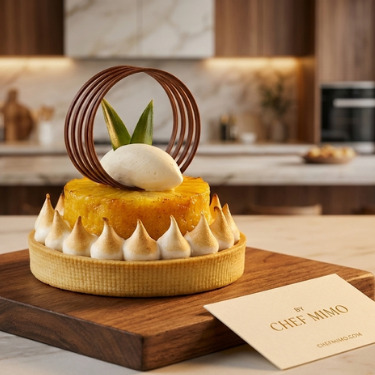
Pineapple Tartlet — A Tropical French Dessert with Almond Cream, Rum & Lemon Meringue 🍍✨
A Tropical Symphony in Four Movements: Introduction to the Pineapple Tartlet
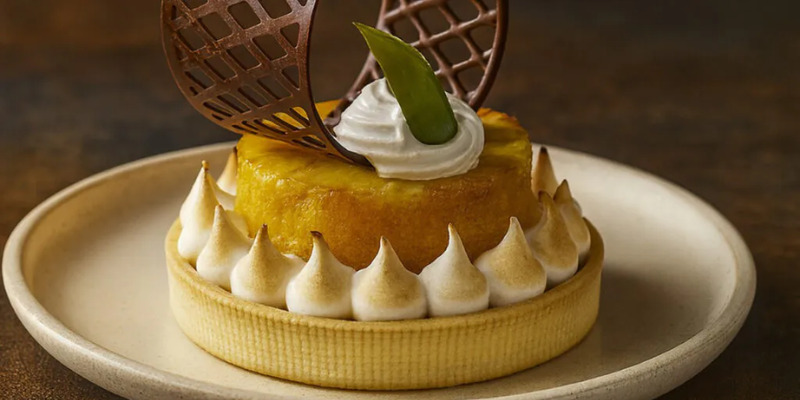
Inspired by the refined elegance of French pâtisserie (reminiscent of styles by chefs like Vincent Boué), this Pineapple Tartlet is a masterclass in architectural dessert making. It moves beyond the flat fruit tart to create a vertical presentation that is as striking as it is delicious.The genius of this dessert lies in its layers:The Foundation: A Vanilla Almond Sablé that offers a buttery, short snap.The Heart: A baked Almond Cream enriched with rum, providing a soft, cake-like transition.The Crown: A caramelized Pineapple Cylinder, roasted until golden and juicy.The Finish: A halo of Lemon Swiss Meringue, torched to provide a marshmallowy sweetness that cuts the acidity of the fruit.Why master this specific tart? It teaches the crucial balance between "dry" and "wet" components. The challenge is ensuring the sablé remains crisp despite holding the moist almond cream and the juicy pineapple. It is a study in moisture management and structural integrity, resulting in a dessert worthy of a boutique window display.Ingredients
Vanilla Almond Sablé Dough
- 250 g unsalted butter
- 4 g salt
- 110 g icing sugar
- 40 g almond powder
- 250 g flour T55
- 60 g whole eggs
- 3 g vanilla extract
Almond Cream with Rum
- 100 g unsalted butter soft
- 100 g sugar
- 100 g whole eggs
- 100 g almond powder
- 15 g cornstarch
- 10 g rum
- Vanilla flavoring as needed
Caramelized Pineapple Cylinder with Rum
- 1 fresh pineapple
- 50 g unsalted butter
- 100 g sugar
Lemon Swiss Meringue (Decoration)
- 50 g egg whites
- 100 g sugar
- Zest of ½ lemon
Mastering Textures and Flavors📗 Download your PDF now!
Instructions
🥧 1. Vanilla Almond Sablé Dough
- Cream together the butter, salt, vanilla, and icing sugar until smooth.
- Add the eggs and mix until combined.
- Fold in the flour and almond powder gently without overworking the dough.
- Wrap in plastic and refrigerate for 24 hours.
- Roll out the dough to 2–3 mm thickness and line tartlet rings.
- Chill again before baking to prevent shrinking.
🥥 2. Almond Cream with Rum
- Cream the softened butter and sugar until light.
- Gradually add the eggs while whisking to create a smooth emulsion.
- Fold in the almond powder and cornstarch.
- Add rum and vanilla to flavor.
- Pipe the almond cream into the prepared tartlet shells.
🍍 3. Caramelized Pineapple Cylinder
- Peel the pineapple and cut into cylinders about 5 cm high, removing the core.
- In a pan, melt the butter and sugar until golden caramel forms.
- Add the pineapple cylinders and cook until they are nicely colored and infused.
- Cool down and place the cylinders on top of the almond cream in each tartlet.
- Use the trimmings to prepare a pineapple coulis that will be poured into the pineapple core after baking.
🍋 4. Lemon Swiss Meringue (Decoration)
- Heat the egg whites and sugar over a bain-marie to 50–55 °C, whisking constantly.
- Remove from heat and continue whipping until glossy stiff peaks form.
- Fold in lemon zest.
- Once the tartlets are baked and cooled, pipe the meringue elegantly around the pineapple cylinder.
- Torch lightly for a golden, caramelized finish.
🪄 Pro Tips:
- Blind bake the tartlet shells for 10 minutes before adding the almond cream to keep the base crisp.
- For deeper flavor, marinate the pineapple overnight in rum.
- Swiss meringue holds its shape and shine better than French meringue — ideal for elegant finishes.
- Serve slightly chilled for the perfect texture balance.
Notes
 The Science of Ingredients: Chemistry of Structure and Shine
Every layer relies on a specific chemical reaction to hold its shape.
1. Swiss Meringue (Thermal Stability)
The recipe specifies heating egg whites and sugar to 50–55°C.- The Science: Unlike French meringue (raw whites), Swiss meringue is cooked. Heating the whites denatures the ovalbumin proteins, allowing them to unfurl and trap air more securely. This creates a denser, glossier foam that is stable. It won't "weep" (leak sugar syrup) onto the tart as quickly as a raw meringue would, making it ideal for piping intricate decorations that need to hold their shape for hours.
2. Almond Cream ( The Emulsified Filling)
The filling is a mixture of butter, sugar, eggs, and almond flour.- The Science: This is an emulsion. The goal is to suspend the liquid from the eggs inside the fat of the butter. The almond flour acts as a sponge (due to its fiber and oil content), helping to hold this structure together during baking. If the emulsion breaks (curdles) during mixing, the butter will leak out during baking, leaving a greasy tart shell. This is why "creaming" the butter and adding eggs gradually is chemically vital.
3. Pineapple Enzymes (Bromelain vs. Heat)
Fresh pineapple is used here.- The Science: Fresh pineapple contains bromelain, an enzyme that breaks down protein. While this prevents gelatin from setting (as discussed in previous recipes), here the pineapple is caramelized in a pan. The high heat (over 80°C) deactivates the enzymes. Furthermore, the caramelization (browning of sugar) creates complex flavor compounds (diacetyl and esters) that transform the sharp acidity of raw pineapple into a mellow, roasted sweetness.
4. Cornstarch (The Binder)
A small amount of cornstarch is added to the almond cream.- The Science: Almond cream can sometimes be too wet. The starch gelatinizes during baking, absorbing excess moisture from the butter and rum. This ensures the filling sets into a firm, sliceable cake texture rather than a wet pudding, preserving the crunch of the tart shell underneath.
Essential Professional Kitchen Tools
To achieve the "cylinder" look, you need geometric precision.-
Perforated Tart Rings (8cm)
- Why you need it: Standard fluted tins are often sloped. Perforated rings create perfectly vertical sides, matching the vertical walls of the pineapple cylinder for a clean, architectural look.
-
Round Cookie Cutter (Same diameter as pineapple)
- Why you need it: You need to cut the pineapple cylinder to the exact size of your tart (or slightly smaller to leave room for meringue). Precision here is key to the visual effect.
-
Blowtorch
- Why you need it: While you can brown meringue in the oven, a blowtorch gives you control. You can target specific peaks of the meringue to create contrast between white and gold, without cooking the fresh pineapple underneath.
-
Bain-Marie (Double Boiler)
- Why you need it: For the Swiss Meringue. You must heat the whites gently to dissolve the sugar without scrambling the eggs. Direct heat is too aggressive.
Expert Tips and Success Hacks
Achieve the clean lines of a professional tart with these secrets.1. The "Blind Bake" Barrier
The almond cream is wet; the dough is dry.- The Hack: Do not pipe almond cream directly into raw dough. Blind bake the shells for 10 minutes first until they just start to set and turn pale gold. Then pipe in the cream and finish baking. This creates a "crust" on the dough that acts as a moisture barrier, ensuring the bottom stays crisp.
2. Pineapple Core Coulis
The recipe mentions using the trimmings.- The Hack: The core of the pineapple is tough but flavorful. Boil the cores and trimmings with a little sugar and water, then blend and strain vigorously. This yields a potent "Pineapple Gel" or Coulis. After baking the tart with the almond cream, pipe a small hidden pocket of this intense gel into the center of the cream before placing the pineapple cylinder on top. It adds a surprise burst of acidity.
3. Rum Infusion Timing
- The Hack: Alcohol evaporates in the oven. To keep the rum flavor potent, brush the baked almond cream with a little rum syrup (rum + sugar water) right when it comes out of the oven. The hot cake absorbs the syrup instantly (like a Baba au Rhum), keeping it moist and flavorful.
4. Meringue Temperature
Piping warm meringue is a mess.- The Hack: After whipping the Swiss meringue to stiff peaks, let it cool until it is room temperature before piping. If it's warm, it will melt the butter in the almond cream or slide off the juicy pineapple.
5. Sealing the Pineapple
- The Hack: Before placing the caramelized pineapple cylinder onto the baked tart, pat it dry with a paper towel. Excess caramel sauce will drip down and make the tart shell soggy. You want the flavor, not the liquid.
Frequently Asked Questions (FAQ)
Q1: Can I use canned pineapple rings? A: You can, but you lose the "Cylinder" height that makes this dessert modern. Canned rings are flat. If you must use canned, stack 2-3 rings on top of each other to achieve the height, or chop them into a compote instead. Q2: Why did my Sablé dough shrink? A: The dough was likely overworked (gluten developed) or not chilled enough. After lining the rings, freeze them for 20 minutes before baking. This relaxes the gluten and solidifies the butter, locking the shape in place. Q3: Can I make the meringue in advance? A: Swiss meringue is stable for a few hours, but humidity is its enemy. It is best piped and torched on the day of serving. If you keep it in the fridge overnight, it may start to absorb moisture and become sticky or "weep." Q4: Can I substitute the rum? A: Yes. For a non-alcoholic version, use Lime Juice and zest in the almond cream. The lime/pineapple/coconut (if you swap almond for coconut powder) combination is a classic Piña Colada profile without the booze. Q5: My almond cream split when adding eggs. Is it ruined? A: No. It just looks ugly. The eggs were likely too cold compared to the soft butter. To fix it, gently warm the bowl (hairdryer or warm water bath) and whisk vigorously. Or, add a tablespoon of the flour from the recipe—the starch will help bind the fat and liquid back together. Tried this recipe?Let us know how it was!

I’m Chef Mimo, a passionate pastry chef with over 17 years of experience in the world of fine desserts. I specialize in French-style entremets, refined cakes, and creative chocolate work. Pastry is not just my profession—it’s my lifelong passion. Through PastryCrafted.com, I love sharing my recipes, techniques, and inspirations with anyone who dreams of mastering the art of pastry. Whether you’re a curious beginner or a seasoned pro, you’re welcome in my sweet world.