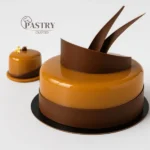
Coffee & Cinnamon Ca with Milk Chocolate Cremieux and Yellow Mirror Glaze
A Symphony of Spices and Cream: Introduction to the Coffee & Cinnamon Entremet
In the world of high-end pâtisserie, few creations command as much respect and delight as the entremet. A complex, multi-layered mousse-based cake, the entremet is the quintessential definition of French pastry architecture. This specific creation—the Coffee & Cinnamon Entremet with Milk Chocolate Crémeux and Yellow Mirror Glaze—is not merely a dessert; it is a narrative of textures and a study in flavor balance. Born from a spirited collaboration with Julien, a celebrated former contestant on the hit French television show "Le Meilleur Pâtissier" (The Best Baker), this recipe bridges the gap between home baking and professional artistry.Why is this combination a must-try? The flavor profile moves away from the aggressive sweetness often found in modern desserts, leaning instead into the warmth of aromatic spices and the depth of roasted beans. The cinnamon is not merely a background note; it is infused into a soft madeleine sponge, providing a nostalgic warmth that pairs impeccably with the bitterness of the coffee.The structure of the cake is designed to take the palate on a journey. It begins with the Sablé Diamant Reconstructed Base—a technique where shortbread is baked, pulverized, and reconstituted with butter to create a crunch that remains crisp even under layers of moisture. This is followed by the Milk Chocolate Coffee Crémeux, a layer that sits halfway between a ganache and a pudding, offering a dense, creamy mouthfeel. The experience is enveloped in a light-as-air White Chocolate Coffee Mousse, and finally, the dessert is robed in a striking Yellow Mirror Glaze.While the vibrant yellow exterior might visually suggest lemon or passion fruit, it offers a delightful "trompe-l'œil" (trick of the eye) effect, revealing the deep, comforting notes of cappuccino and winter spices upon the first bite. This dessert is significant not just for its taste, but for the techniques it teaches: precise temperature control, the art of infusion, and the chemistry of emulsions. It is a centerpiece worthy of the finest vitrines in Paris, now accessible for your kitchen. Servings 9 people
Ingredients
✳️ Sable Diamant Reconstructed Base
- 100 g cold butter
- 43 g powdered sugar
- 13 g egg yolks
- 2.5 g salt
- 5 g ground cinnamon
- 113 g flour
- To finish the base:
- 150 g sablé crumbs baked & blended
- 45 g brown sugar
- 50 g melted butter
✳️ Cinnamon Madeleine Sponge
- 75 g whole eggs
- 55 g light brown sugar vergeoise
- 25 g chestnut honey
- 75 g flour
- 3 g baking powder
- 1.5 g ground cinnamon
- 0.75 g salt
- 53 g melted butter
- 60 g pecans chopped
✳️ Milk Chocolate Coffee Cremieux
- 180 g heavy cream 30%
- 23 g egg yolks
- 90 g milk chocolate
- 2 g gelatin 200 bloom, hydrated
- 45 g coffee beans whole
- Pinch of fleur de sel
✳️ White Chocolate Coffee Mousse
- 116 g heavy cream for infusion
- 50 g coffee beans for infusion
- 1 tsp instant coffee
- 116 g white chocolate
- 2.5 g gelatin 200 bloom, hydrated
- 250 g heavy cream softly whipped
✳️ Yellow Milk Chocolate Mirror Glaze
- 100 g sugar
- 100 g glucose syrup
- 53 g water
- 67 g sweetened condensed milk
- 100 g milk chocolate
- Yellow liposoluble coloring
- 6 g gelatin 200 bloom, hydrated in 36 g water
Instructions
Sablé Diamant Base
- Cream butter and powdered sugar. Add yolk, salt, cinnamon. Mix in flour without overworking.
- Chill for 2 hours, then crumble and bake at 170°C for 15 min.
- Blend into crumbs, mix 150 g with brown sugar and melted butter.
- Spread between parchment paper to 3 mm, cut a 16 cm disc, and chill.
Cinnamon Madeleine Sponge
- Whisk eggs, sugar, and honey until fluffy.
- Fold in sifted flour, baking powder, cinnamon, and salt.
- Add melted butter and chopped pecans.
- Pour into a 16 cm ring and bake at 170°C (fan) for 15 min.
- Let cool in the ring.
Milk Chocolate Coffee Cremieux
- Infuse coffee beans in hot cream for 15 min, strain and reweigh to 180 g.
- Make crème anglaise with yolks and infused cream. Cook to 83°C.
- Add to milk chocolate, along with gelatin and a pinch of salt.
- Blend until smooth and cool to room temp.
- Insert assembly: Pour crémeux over sponge in 16 cm ring and freeze.
White Coffee Mousse
- Infuse beans in 116 g cream. Add instant coffee. Strain and reweigh.
- Reheat and pour over white chocolate in 3 additions.
- Emulsify, add gelatin. Cool to 20°C.
- Fold in softly whipped cream. Use immediately.
🧩 Entremet Assembly (Reverse)
- Line an 18 cm ring with acetate.
- Pour mousse, pushing it up the sides.
- Insert frozen crémeux + sponge center.
- Cover with mousse, top with sablé base.
- Smooth surface and freeze 12 hours.
Mirror Glaze
- Hydrate gelatin.
- Boil sugar, glucose, and water to 103°C.
- Pour over condensed milk and chocolate.
- Add gelatin and yellow coloring.
- Blend, chill 12 hours.
- Reheat to 35°C before use.
✨ Final Touch
- Unmold the entremet, glaze at 35°C.
- Chill for 6 hours before serving.
- Decorate with milk chocolate curls or decor.
Notes
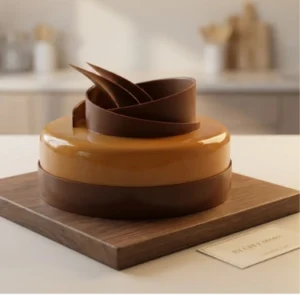 The Science of Ingredients: The Alchemy of Pastry
To master this entremet, one must understand that baking is chemistry you can eat. Every ingredient in this recipe has a functional purpose beyond flavor. Here is how they work on a molecular level to create the perfect structure.
1. Gelatin (Bloom Strength 200)
Gelatin is the structural scaffolding of this dessert. In professional pastry, we refer to the "bloom strength," which measures the gelling power. This recipe calls for 200 bloom (Gold/Silver grade).- The Science: Gelatin is a hydrocolloid. When hydrated in cold water and then melted, the protein chains unravel. As the mousse or glaze cools, these chains reform into a mesh that traps water and fat. In the Mirror Glaze, the gelatin provides elasticity, allowing the glaze to drape over the cake without cracking. In the Mousse, it stabilizes the aerated cream, preventing it from collapsing under the weight of the glaze.
2. Glucose Syrup
You will notice glucose syrup in the glaze recipe. It is not just a sweetener; it is an "interfering agent."- The Science: Table sugar (sucrose) wants to recrystallize into a grainy texture when boiled. Glucose syrup consists of long chains of sugar molecules that physically get in the way of sucrose molecules, preventing them from bonding together. This ensures your glaze remains perfectly smooth and glossy rather than gritty. Furthermore, glucose adds viscosity, giving the glaze that thick, professional sheen that clings to the sides of the cake.
3. Heavy Cream (30% vs. 35% Fat)
The recipe distinguishes between cream for infusion and cream for whipping.- The Science: Fat is a carrier of flavor. Many aromatic compounds in coffee beans are fat-soluble, not water-soluble. By infusing the coffee beans directly into the hot cream (fat), we extract the essential oils and rounder flavor notes without the acidity that comes from brewing coffee with water. For the whipped portion (the mousse), the fat globules surround air bubbles, stabilizing the foam. Using a cream with at least 30-35% fat is critical; anything less will not hold the air structure needed to give the mousse its "cloud-like" texture.
4. Chestnut Honey vs. Invert Sugar
The Cinnamon Madeleine Sponge uses chestnut honey.- The Science: Honey is a natural invert sugar, meaning it is highly hygroscopic—it attracts and holds water molecules from the environment. While granulated sugar crystallizes and can dry out a sponge, honey forces the crumb to retain moisture. This ensures the sponge remains soft and tender even after freezing and thawing, which is essential for an entremet that undergoes temperature shocks.
Essential Professional Kitchen Tools
While this recipe is achievable at home, elevating your results to a professional standard requires specific precision tools. Here is your arsenal for success:-
Digital Gram Scale (0.1g Precision)
- Why you need it: Baking is not about cups and spoons; it is about ratios. In recipes involving gelatin or baking powder, a difference of 2 grams can ruin the texture. A high-precision scale ensures your chemical leaveners and setting agents are exact.
-
Digital Probe Thermometer
- Why you need it: This is the most critical tool for the Mirror Glaze. The glaze must be poured at a specific temperature (usually between 32°C and 35°C). If poured too hot (40°C), it will melt the mousse and slide off, leaving the cake bare. If poured too cold (28°C), it will clump and set in thick, uneven blobs.
-
Immersion Blender (Stick Blender)
- Why you need it: For the glaze and crémeux. A whisk introduces air bubbles, which are the enemy of a mirror finish. An immersion blender, kept submerged below the surface, creates a "vortex" that emulsifies the fat and liquid into a silky smooth texture without incorporating air bubbles, ensuring a glass-like reflection.
-
Acetate Roll (Cake Collar)
- Why you need it: When building the entremet in a ring, lining it with acetate ensures a perfectly smooth release. It prevents the mousse from sticking to the metal ring and tearing when you unmold it, giving you sharp, clean 90-degree edges.
-
Perforated Baking Mat (e.g., Silpat)
- Why you need it: For the Sablé Diamant. A perforated mat allows heat to circulate evenly under the dough and allows moisture to escape from the bottom. This results in a tart shell or cookie base that is evenly browned and incredibly crisp, rather than soggy in the center.
Expert Tips and Success Hacks
To guarantee your Coffee & Cinnamon Entremet looks as good as it tastes, follow these five high-value secrets used in professional French kitchens.1. The "Hard Freeze" is Non-Negotiable
You cannot glaze a semi-frozen cake. The entremet must be frozen solid (ideally at -18°C / 0°F) for at least 12 hours.- The Hack: The thermal shock between the frozen mousse and the warm glaze ($35^circ$C) is what causes the gelatin in the glaze to set instantly on contact. If the cake is slightly soft, the water content will bleed into the glaze, ruining the shine.
2. Condensation Control
When you remove the cake from the freezer to glaze it, a layer of frost or condensation will form within seconds due to humidity.- The Hack: Immediately before pouring the glaze, run your clean, dry palm gently over the surface and sides of the frozen mousse to swipe away ice crystals. Glaze adhering to water droplets will slide off; glaze adhering to the mousse will stick.
3. The Viscosity Check
While the thermometer says $35^circ$C, every batch of glaze behaves slightly differently depending on the chocolate brand and ambient humidity.- The Hack: Perform a "spoon test." Dip a metal spoon into the glaze and coat the back. Run your finger through it. The line should hold clearly without dripping immediately. If it runs like water, it's too hot. If it sets into a rubbery gel instantly, it's too cold. Trust viscosity as much as temperature.
4. Perfecting the Coffee Infusion
Many home bakers throw away the coffee beans after infusion, losing precious flavor that stays trapped in the oils on the bean surface.- The Hack: After straining your infused cream, press down hard on the beans in the sieve to extract the "coffee butter" (the fats clinging to the beans). However, be sure to re-weigh your liquid afterward. The beans will absorb some liquid, so you must top up with fresh cream to reach the exact gram weight listed in the recipe (e.g., returning to exactly 180g for the crémeux).
5. The "Reconstructed" Base Technique
Why bake a shortbread, crush it, and mix it with butter again? This seems redundant, but it is a genius textural hack.- The Hack: A standard cookie dough placed at the bottom of a mousse cake absorbs moisture and becomes soggy after 24 hours. By double-baking the crumbs and coating them in fat (melted butter) and brown sugar, you are "waterproofing" the crunch. This ensures that even on day 3, the base provides a distinct, audible snap against the soft mousse.
Frequently Asked Questions (FAQ)
Q1: Can I make this cake in advance? How long does it last? A: Absolutely. In fact, entremets are designed to be made in stages. You can assemble the entire cake (sponge, crémeux, mousse) and keep it in the freezer, unglazed, for up to 3 weeks. Once glazed and thawed in the fridge, it should be consumed within 48 hours for the best texture. The glaze will lose its shine after day 2 in the fridge. Q2: What is the best substitute for Glucose Syrup if I can't find it? A: Light corn syrup is the closest substitute in the US and works well with a 1:1 ratio. It has similar anti-crystallization properties. Avoid using honey or maple syrup for the glaze, as they have strong distinct flavors and a darker color that will tint your yellow glaze brownish. For the structure, corn syrup is your safest bet. Q3: My glaze turned out see-through and sheer. What went wrong? A: This usually happens for two reasons: either the glaze was poured too hot (above $35^circ$C), causing it to run off the cake too quickly before setting, or there wasn't enough white chocolate/condensed milk to provide opacity. Ensure you let the glaze cool down to the target temperature so it is thick enough to coat the sides effectively. Q4: Can I use instant gelatin powder instead of sheet gelatin? A: Yes, but you must calculate the water carefully. One sheet of "Gold" gelatin weighs roughly 2 grams. If the recipe calls for 6g of gelatin sheets (3 sheets), use 6g of gelatin powder. However, you must hydrate the powder in 5-6 times its weight in cold water (e.g., 6g powder + 30-36g water) and add that entire jelly mass to the recipe. Q5: Why do we freeze the center "insert" (Crémeux + Sponge) separately? A: This is standard "Reverse Assembly." If the center insert is soft, you cannot push it down into the liquid mousse without destroying the layers. By freezing the crémeux and sponge into a solid puck, you can press it perfectly into the center of the mousse, ensuring that when you slice the cake, you get perfect, clean geometric layers every time.