Ganache and Whipped Ganache Recipes
The Art of the Perfect Emulsion: Introduction to Ganache
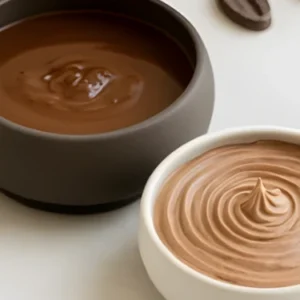
If Pastry Cream is the mother of custards, Ganache is the mother of chocolate work. At its simplest, it is just chocolate and cream. But as every pastry chef knows, simplicity is deceptive. A perfect ganache is a smooth, glossy, stable emulsion of fat (cocoa butter and milk fat) and water (from the cream). A failed ganache is grainy, oily, or split.This masterclass covers three essential variations:Classic Ganache: Dense and fudge-like, ideal for tart fillings and coating cakes.Whipped Ganache: Aerated and light, perfect for piping on entremets.Mascarpone Whipped Ganache: Ultra-stable and creamy, designed for layer cakes and piping that holds its shape for days.The key to success lies not just in the recipe, but in the technique. Whether you are using dark chocolate (high cocoa solids) or white chocolate (pure fat and sugar), understanding the ratios and the physics of mixing is what separates a home baker from a professional chocolatier.Ingredients
Classic Ganache
- 250 g heavy cream 30% fat
- 20 g acacia honey or glucose syrup
- 210 g dark chocolateor 375 g milk chocolateor 480 g white or blond Dulcey chocolate
Whipped Ganache Dark Chocolate Version
- 250 g heavy cream 30% fat
- 25 g acacia honey or glucose syrup
- 210 g dark chocolate
- 515 g cold heavy cream 30% fat
Whipped Ganache Milk, White, or Blond Version
- 250 g heavy cream 30% fat
- 25 g acacia honey or glucose syrup
- 340 g milk white, or blond chocolate
- 645 g cold heavy cream 30% fat
Whipped Ganache with Mascarpone Dark Chocolate Version
- 210 g heavy cream 30% fat
- 110 g dark chocolate
- 250 g mascarpone
- Whipped Ganache with Mascarpone Milk, White, or Blond Version
- 210 g heavy cream 30% fat
- 155 g milk white, or blond chocolate
- 250 g mascarpone
Instructions
Classic Ganache
- Melt the chocolate in a bain-marie until smooth.
- Simultaneously heat the cream with the honey until hot (not boiling).
- Remove the melted chocolate from the heat and pour in one-third of the hot cream. Stir with a spatula.
- Add the second third of the cream, mixing well, then the final third.
- Blend the mixture with an immersion blender to emulsify fully, avoiding air bubbles.
- Use immediately to pour into tarts or inserts. If you plan to pipe it, let it rest at room temperature or refrigerate until firm enough to hold shape.
Whipped Ganache (all variations)
- Melt the chocolate gently over a bain-marie.
- Heat the initial 250 g cream with the honey until warm.
- Remove the chocolate from heat and emulsify in three additions of the hot cream, mixing each time.
- Blend with an immersion blender.
- Add the cold cream and blend again.
- Cover with plastic wrap directly on the surface and chill for at least 6 hours.
- Once chilled, whip the ganache using a stand or hand mixer until it forms soft to medium peaks. Do not overwhip.
Whipped Ganache with Mascarpone (all variations)
- Melt the chocolate in a bain-marie.
- Warm the cream until hot.
- Emulsify the cream into the chocolate in three additions.
- Blend with an immersion blender.
- Cover with plastic wrap and chill for at least 6 hours.
- Whip briefly to loosen the ganache.
- Add mascarpone and whip again until thick, creamy, and stable. Use immediately.
Notes
The Science of Ingredients: Chemistry of Chocolate Cream
Why do we need different ratios for Dark, Milk, and White chocolate?1. Cocoa Butter Content (The Ratio Rule)
You will notice the recipes call for 210g of Dark Chocolate but nearly double that (480g) for White Chocolate to the same amount of liquid.- The Science: Dark chocolate is high in cocoa butter and cocoa solids, which are firm at room temperature. White chocolate is mostly sugar and milk powder, which are softer. To achieve the same "set" or firmness, you need significantly more white chocolate to compensate for its lack of structural cocoa solids. If you used the dark chocolate ratio for white chocolate, you would end up with a soup, not a ganache.
2. Acacia Honey or Glucose (The Texture Doctor)
The recipe includes 20-25g of invert sugar (honey or glucose).-
The Science: This isn't for sweetness. Invert sugars bind water molecules tightly (hygroscopy). In a ganache, this does two things:
- Texture: It keeps the ganache "elastic" and pliable, preventing it from cracking or drying out.
- Water Activity: By binding the water, it lowers the "free water" available for bacteria, slightly extending shelf life.
3. The Emulsion (Fat-in-Water)
Ganache is chemically similar to mayonnaise.-
The Science: You are trying to force fat droplets (cocoa butter) to suspend evenly inside water (cream).
- Friction: Pouring hot cream over chocolate melts it, but friction creates the emulsion. Mixing from the center outwards creates a "vortex" that smashes the fat and water molecules together.
- Temperature: If the mixture is too hot (>60°C), the cocoa butter separates (oils out). If too cold (<35°C), the cocoa butter solidifies before it can emulsify, causing lumps.
4. Mascarpone (The Stabilizer)
One variation uses Mascarpone cheese.- The Science: Mascarpone is essentially high-fat cream (around 40-45% fat) that has been acidified. By adding it to the ganache, you are increasing the fat content significantly without adding more liquid water. This extra fat creates a rigid structure when whipped, making it the most stable piping cream available—ideal for cakes that need to sit out at room temperature.
Essential Professional Kitchen Tools
To ensure a glossy, bubble-free finish, these tools are non-negotiable.-
Immersion Blender (Stick Blender)
- Why you need it: A whisk or spatula can mix ingredients, but they also incorporate air. Air is the enemy of a dense Classic Ganache (it creates bubbles and shortens shelf life). An immersion blender, kept submerged, creates high-shear force to perfect the emulsion without adding air.
-
Tall, Narrow Jug
- Why you need it: To use the immersion blender correctly, the head must be fully covered by the liquid. A wide bowl forces you to tilt the blender, sucking in air. A tall jug ensures a perfect vortex.
-
Bain-Marie (Double Boiler)
- Why you need it: Chocolate burns at 45°C-50°C. Melting it directly in a pan is risky. A gentle steam bath ensures the chocolate is fully melted without seizing or scorching before you add the cream.
Expert Tips and Success Hacks
Achieve the "Valrhona shine" with these professional secrets.1. The Rule of Thirds
Never dump all the cream in at once.- The Hack: Pour 1/3 of the hot cream over the chocolate. Stir rapidly in the center with a spatula. It will look gross—oily, separated, and grainy. This is normal. You are creating a "saturated" core. Add the second third; it will start to look smooth. Add the final third to thin it out. This gradual friction builds a stronger elastic bond than dumping it all in at once.
2. The 12-Hour Crystal Rest
Whipped ganache cannot be rushed.- The Hack: You must chill the liquid ganache for at least 6 hours (ideally 12) before whipping. Why? Cocoa butter needs time to crystallize into a solid network. If you whip it while warm (or even just cool but not set), the fat is still fluid. It won't hold air bubbles, and it will eventually collapse into a soup.
3. Whip It Cold, Whip It Slow
The biggest mistake is overwhipping.- The Hack: Whip the cold ganache on medium speed, not high. High speed generates heat (friction), which melts the cocoa butter you just spent 12 hours crystallizing. Watch it like a hawk. The moment it holds soft peaks and looks matte, STOP. It will continue to firm up in the piping bag. If it looks grainy, you went 10 seconds too long.
4. Rescue for Split Ganache
If your ganache looks like curdled oil, don't throw it away.-
The Hack: A split ganache usually lacks water or is too hot.
- Too Hot: Let it cool to 40°C and blend again.
- Too Oily: Add a teaspoon of cold liquid cream or milk and blend vigorously with the immersion blender. The little bit of extra water helps re-bind the excess fat.
5. Contact Wrapping
Skin formation creates lumps.- The Hack: Always press plastic wrap directly onto the surface of the ganache before putting it in the fridge. If you leave an air gap, condensation will form (adding water droplets to your emulsion) and a rubbery skin will develop on top. When you try to whip it later, that skin breaks into tiny, un-meltable lumps in your smooth cream.
Frequently Asked Questions (FAQ)
Q1: Can I use chocolate chips? A: Ideally, no. Chocolate chips often contain stabilizers (like soy lecithin) designed to help them hold their shape in cookies. This makes them resistant to melting smoothly. Use "Couverture" chocolate (bar or feves) which has a higher cocoa butter content for a fluid melt. Q2: Why is my whipped ganache grainy? A: Graininess comes from two things: overwhipping (turning the cream into butter) or whipping it when it wasn't cold enough. If it's grainy, you can sometimes save it by melting it down gently, chilling it again for 6 hours, and re-whipping (carefully). Q3: Can I freeze ganache? A: Yes.- Classic Ganache: Freezes beautifully for months.
- Whipped Ganache: Freeze it unwhipped (liquid state). Thaw in the fridge, then whip. If you freeze it after whipping, the air bubbles may collapse upon thawing, ruining the texture.
- Classic Ganache: Stable for 2-3 days at room temp (depending on the cream/chocolate ratio).
- Whipped Ganache: Needs refrigeration. It will melt and lose volume if left out in a warm room (>22°C).
- Mascarpone Ganache: Sturdier, can handle 2-3 hours out of the fridge, but contains cheese, so food safety dictates keeping it cool.